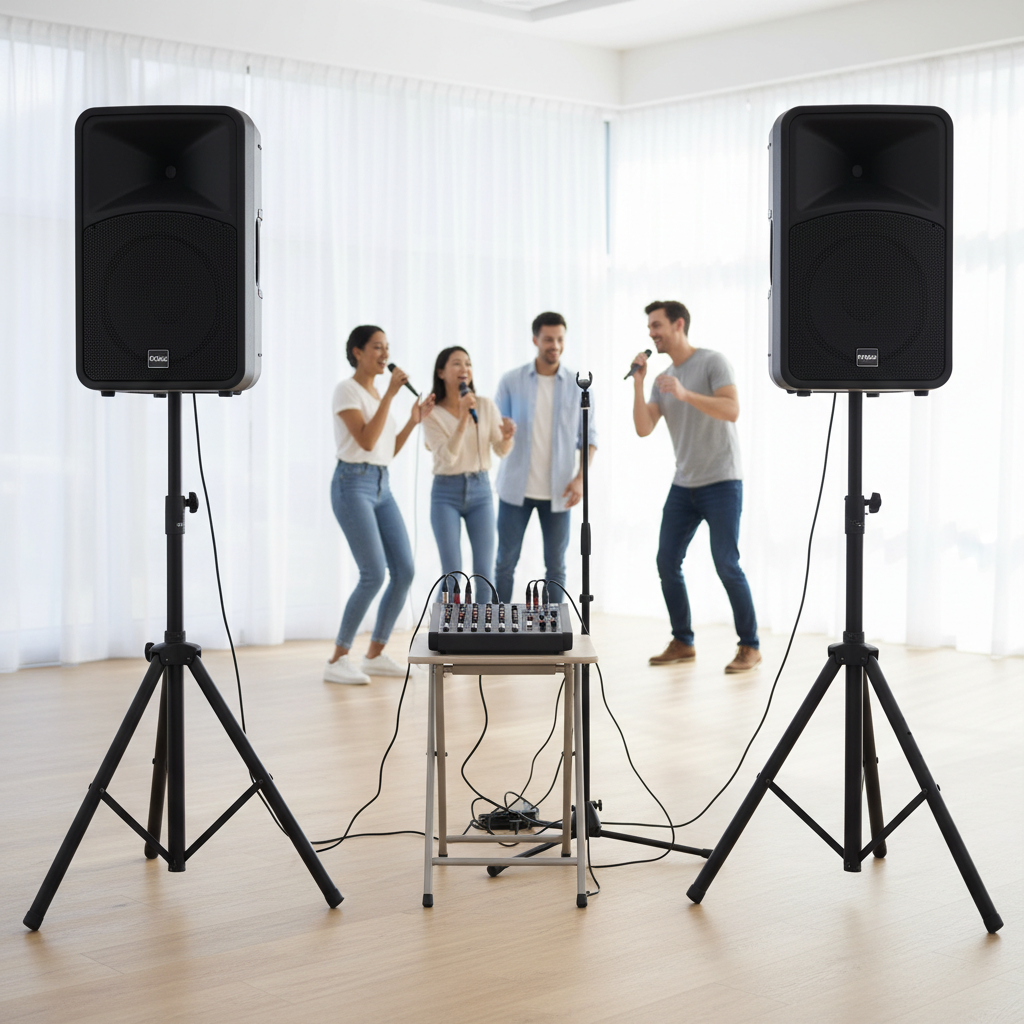
Stepping up your home entertainment means more than just crystal-clear movies and immersive gaming. It’s about creating memorable experiences, and what’s more engaging than belting out your favorite tunes with a fantastic karaoke setup? If you’re looking to elevate your home karaoke in 2026, finding the right soundbar with dedicated karaoke input ports or seamless integration is paramount. This article, drawing on over a decade of hands-on experience in audio and karaoke systems, will guide you through making the smartest choice, ensuring your next singalong session sounds professional and feels incredible.
Factors to Consider When Choosing a Karaoke Soundbar System
Selecting the perfect soundbar for your karaoke needs involves more than just picking the loudest option. It’s about harmony between audio fidelity, connectivity, and user-friendliness.
Built-in Karaoke vs. External Mixer Compatibility
|
Our Picks for the Best Karaoke system in 2026
As an Amazon Associate I earn from qualifying purchases.
|
||
| Num | Product | Action |
|---|---|---|
| 1 | Karaoke Machine, Portable Bluetooth Speaker with 2 Wireless Microphones for Adults & Kids with Lights, Karaoke Microphone with PA System Supports USB/TF/REC/FM/AUX for Home Party Home System Packages |

|
| 2 | Ikarao Portable Karaoke Machine for Adults, Built-in Lyrics Display and Screen, 2 Self-Charging Wireless Microphones, Karaoke App, 140W Speaker, Connects to TV for Home Party Birthday Outdoor Camping |
|
| 3 | Karaoke Machine for Adults, Built-in 10.1" HD Lyrics Screen, Supports WiFi Bluetooth HDMI USB and TF, Portable Karaoke Player with 2 Wireless Microphones for Home Party Family Gathering |
|
| 4 | Karaoke Machine, Portable Bluetooth 5.3 Speaker with 2 Wireless Microphones for Adults, PA System with Pitch Correction & Echo Adjustment, Supports TWS/TF Card/USB/AUX/Live for Home Party (2MICS) |
|
| 5 | VOSOCO Karaoke Machine with 2 Wireless Microphones, Portable Bluetooth Speaker for Adults Kids, PA Systems Support TWS Echo Adjust TF USB AUX for Home Party Outdoor Travel |
|
| 6 | Karaoke Soundbar with Subwoofer for TV: Sound Bar with 2 Wireless Microphones - Home Theater Surround Sound System - Bluetooth Speaker with Remote Supports HDMI ARC/Optical/AUX/USB for TV/PC |
|
| 7 | Ikarao Smart Karaoke Machine for Adults - with Lyrics Display, 32GB Karaoke Tablet, 2 Wireless Mics, Professional Karaoke System, 300W Peak Power, 4 DJ Lights, Karaoke Speaker for Any Occasion |
|
| 8 | NBVOICE Professional Portable All-in-One Integrated 2-Way PA System Fixed Setup, Suitcase Design w/ 8-Channel Mixer, 2 Speaker Stands, Bluetooth, Mic for Performances, Presentations |
|
| 9 | Portable Karaoke Machine, with Wireless Microphones, Bluetooth Party Speaker with LED Lights, Loud Subwoofer, USB/AUX, Outdoor Karaoke Speaker for Adults & Kids, Home & Party |
|
| 10 | JBL Wireless Two Microphone System with Dual-Channel Receiver, Black |
|
The first crucial decision is whether you want an all-in-one soundbar with integrated microphone inputs or if you’ll pair a premium soundbar with a dedicated external karaoke mixer. Dedicated karaoke soundbars, like the Vizio MicMe 2.1, offer convenience with built-in mic ports, often wireless microphones, and karaoke-specific features right out of the box. Conversely, many high-end soundbars excel in cinematic audio but lack direct mic inputs, necessitating an external mixer to blend vocals and music before sending the combined audio to the soundbar.
Audio Quality for Music and Vocals
A soundbar’s core purpose is superior audio. For karaoke, this means excellent clarity for both background music and your vocals. Look for models supporting advanced audio formats like Dolby Atmos and DTS:X, which create an immersive soundstage for music and movies. Crucially, ensure the soundbar delivers clear dialogue (for lyrics) and powerful, punchy bass for a vibrant musical foundation.
Connectivity Options
Modern soundbars offer a variety of ways to connect. For karaoke, HDMI ARC/eARC is often the preferred choice, allowing high-quality audio and video to pass between your TV and soundbar with a single cable. This is ideal when your TV is the source of karaoke content. Other vital connections include:
- Optical (Toslink/SPDIF): For reliable digital audio transmission, especially if your soundbar or mixer doesn’t support HDMI ARC.
- AUX (3.5mm): A standard analog input, useful for connecting older mixers.
- Bluetooth: For wirelessly streaming karaoke tracks from your phone or tablet. Be mindful of potential latency.
- USB: Useful for playing music directly from a flash drive or, in some cases, connecting specific USB microphones.
Microphone Features
The microphones are your voice to the system. Many dedicated karaoke soundbars include wireless dynamic microphones, which are convenient and reduce cable clutter. Look for features like:
- Wireless connectivity: Offers freedom of movement.
- Rechargeable batteries: USB-C charging is a modern, convenient feature.
- Vocal effects: Built-in echo, reverb, or pitch control can significantly enhance performances and are often adjustable via a companion app.
Ease of Setup and User Experience
You want to spend more time singing and less time troubleshooting. Soundbars with intuitive controls, clear on-screen menus, and dedicated smartphone apps for sound tuning and vocal effects make setup and use a breeze. Quick and seamless integration with your TV and music sources is key.
Room Size and Power Output
Match the soundbar’s wattage and speaker configuration (e.g., 2.1, 4.1, 5.1) to your room size. A larger room demands more power and potentially more speakers for adequate sound distribution, especially with a subwoofer for impactful bass.
Types of Karaoke Soundbar Systems
The market for karaoke-ready soundbars is evolving, offering several configurations to suit different needs and budgets.
All-in-One Karaoke Soundbars
These are purpose-built units that combine the soundbar, amplifier, and microphone inputs into a single device, often including wireless microphones. They are designed for simplicity and convenience, making them ideal for casual users or those seeking a compact solution. The Vizio MicMe 2.1 Karaoke Soundbar is a prime example, offering a complete singalong experience with two wireless microphones and Dolby Atmos support. Similarly, the TOPVISION 4.1ch Soundbar offers an all-in-one experience with included USB-C rechargeable microphones and powerful bass.
Soundbars with External Mixer Integration
For audiophiles who already own or plan to purchase a high-performance soundbar (like a Samsung HW-Q990F or Sonos Arc Ultra) but want karaoke capabilities, an external karaoke mixer is the solution. This setup allows you to leverage the superior audio quality of a premium soundbar for both movies and music, while the mixer handles microphone input, vocal effects, and blending. The mixed audio is then sent to the soundbar via HDMI ARC/eARC or optical connection.
Portable Karaoke Soundbars
While not always featuring advanced input ports, some compact, portable soundbars are designed for easy, on-the-go karaoke. These often prioritize battery life and Bluetooth connectivity for impromptu singalongs in various locations.
Key Components of a Karaoke Soundbar System
Understanding the individual elements helps in building or choosing the perfect karaoke setup.
- Soundbar: The central audio output device, responsible for delivering both music and vocal audio.
- Microphones: Essential for singing. Wireless options provide freedom, while wired mics offer reliability without battery concerns.
- Subwoofer (Optional but recommended): Adds depth and impact to music, making karaoke sessions more energetic. Many soundbars come with a dedicated wireless subwoofer.
- Karaoke Mixer (Often external): This device takes microphone inputs, applies vocal effects (like echo and reverb), and mixes them with the music source before sending the combined signal to the soundbar.
- Display (TV/Projector): For displaying song lyrics and background visuals.
Top Soundbars for Karaoke in 2026
While the broader soundbar market in 2026 focuses on immersive audio for movies and music, a few stand out for their direct karaoke capabilities or excellent integration potential.
- Vizio MicMe 2.1 Karaoke Soundbar: This soundbar is a standout for integrated karaoke. It ships with two wireless dynamic microphones that automatically activate karaoke mode when used. It also supports Dolby Atmos and DTS:X for immersive sound, and its companion app allows for six vocal effects and nine ambient light colors for the microphones. Its ease of use and dedicated karaoke features make it a top contender for an all-in-one experience.
- TOPVISION 4.1ch Soundbar with 2 Microphones: This soundbar offers a robust 4.1-channel experience with powerful bass and comes with USB-C rechargeable wireless microphones. It boasts good response and various sound profiles, making it suitable for both entertainment and karaoke.
- High-End Soundbars (e.g., Samsung HW-Q990F, Sonos Arc Ultra) with External Mixer: For those prioritizing top-tier home theater audio and adding karaoke, pairing a leading soundbar like the Samsung HW-Q990F (a premium 11.1.4 system with Dolby Atmos and DTS:X) or the Sonos Arc Ultra (known for its clean, precise, and spacious sound) with a quality external karaoke mixer provides unparalleled flexibility. While these soundbars don’t have direct mic inputs, their superior sound reproduction makes the additional mixer worthwhile for a truly high-fidelity karaoke experience.
Detailed Comparison of Karaoke Soundbar Options
| Feature | Vizio MicMe 2.1 | TOPVISION 4.1ch | Premium Soundbar + External Mixer |
|---|---|---|---|
| Microphone Input | Integrated Wireless Mics | Integrated Wireless Mics (USB-C) | Via External Mixer (XLR/1/4″ inputs) |
| Vocal Effects | Yes (via Vizio app) | Yes (often built-in) | Yes (via external mixer) |
| Sound Quality | Good (2.1, Dolby Atmos/DTS:X) | Good (4.1, powerful bass) | Excellent (immersive Dolby Atmos/DTS:X) |
| Connectivity | HDMI eARC, Bluetooth | Bluetooth, USB, Optical, AUX, HDMI ARC | HDMI eARC, Wi-Fi, Bluetooth, Optical (for mixer) |
| Ease of Setup | Very Easy, All-in-One | Easy, All-in-One | Moderate (requires separate mixer setup) |
| Target User | Casual, convenient | Value-oriented, family fun | Audiophile, high-fidelity home theater with karaoke add-on |
How to Choose the Right Karaoke Soundbar for Your Needs
Making the final decision requires an honest assessment of your priorities and setup.
- Determine Your Budget: Dedicated karaoke soundbars are generally more affordable than high-end soundbars plus a separate mixer. Set a realistic budget to narrow down your options.
- Assess Your Space: For smaller rooms, a compact all-in-one soundbar might be sufficient. Larger living areas can benefit from more powerful soundbars, often paired with a subwoofer and potentially rear speakers for a fuller sound.
- Identify Your Primary Use: Are you a dedicated karaoke enthusiast who will sing weekly, or is it an occasional party activity? If karaoke is paramount, an all-in-one system with dedicated features might be best. If it’s a secondary function to a premium home theater, integrating a mixer is a smarter choice.
- Evaluate Your Technical Savvy: If you prefer a simple, plug-and-play experience, an integrated karaoke soundbar is ideal. If you’re comfortable with more complex audio setups and want granular control, a soundbar with an external mixer offers more flexibility.
- Consider Future-Proofing: Look for current connectivity standards like HDMI eARC and the latest Bluetooth versions to ensure compatibility with future devices.
Common Karaoke Soundbar Setup Issues & Troubleshooting
Even with the best equipment, hiccups can occur. Here are common problems and quick fixes:
- No Sound from Microphones:
- Check all microphone connections to the soundbar or mixer.
- Ensure the soundbar or mixer’s input source is set to the correct microphone input.
- Verify microphone batteries (if wireless) or power supply.
- Increase microphone gain or volume.
- Audio Delay / Lip Sync Issues:
- If using HDMI ARC/eARC, check your TV or soundbar’s audio settings for a lip sync or audio delay adjustment feature.
- Ensure your TV’s audio output is set to “PCM” (Stereo) for mixers, as some don’t process Dolby Digital or DTS.
- Feedback (High-Pitched Squeal):
- Keep microphones pointed away from speakers.
- Reduce microphone volume or gain.
- Avoid standing too close to the soundbar while holding the mic.
- Utilize any built-in feedback suppression on your mixer or soundbar.
- No Music Audio / Only Vocals:
- Verify your TV’s audio output is set to an external speaker option (HDMI ARC or Optical) and not its internal speakers.
- Ensure the music source (e.g., YouTube on TV) is playing and not muted.
- Double-check that your TV’s digital audio out is set to PCM for optimal compatibility with most karaoke mixers.
“The magic of home karaoke isn’t just about singing, it’s about transforming your living room into a stage. The right soundbar system empowers every voice to shine.” – Reviewerc.com Admin, Audio and Karaoke Systems Expert
Conclusion
The journey to finding the best soundbars with karaoke input ports in 2026 is about balancing robust home theater performance with dedicated vocal capabilities. Whether you choose an all-in-one karaoke soundbar like the Vizio MicMe 2.1 for its seamless integration and vocal effects, or opt for a premium soundbar augmented with an external mixer for unparalleled audio fidelity, the goal remains the same: to create unforgettable singing experiences. By prioritizing features like diverse connectivity, wireless microphone support, and clear sound quality, you’re not just buying a sound system; you’re investing in countless hours of joy, laughter, and passionate performances. Ready to hit that high note?
Frequently Asked Questions
Do all soundbars have microphone input ports for karaoke?
No, most standard soundbars are designed primarily for movie and music playback and do not have direct microphone input ports. Soundbars specifically marketed for karaoke, like the Vizio MicMe, or those that integrate with external karaoke mixers, are necessary for singing.
Can I connect a regular microphone directly to any soundbar?
Typically, no. Most soundbars lack the necessary XLR or 1/4-inch jack inputs for direct microphone connection, nor do they have built-in preamps or mixing capabilities. An external karaoke mixer is usually required to connect microphones and then output the mixed audio to the soundbar via its existing inputs (HDMI, Optical, AUX).
What is the best way to get good vocal sound quality with a soundbar?
For optimal vocal quality, consider a soundbar that either has built-in vocal processing or, more commonly, use an external karaoke mixer. The mixer allows you to control microphone volume, apply effects like echo and reverb, and blend your voice smoothly with the music before sending the combined audio to the soundbar for amplification.
Should I choose a wireless or wired microphone for my karaoke soundbar setup?
Wireless microphones offer greater freedom of movement and reduce cable clutter, making them popular for dynamic performances. However, high-quality wired microphones can offer slightly better audio fidelity and don’t require battery management. Many modern karaoke soundbars come with included wireless microphones.
How do I prevent audio feedback when using a microphone with my soundbar?
To minimize feedback, always position your microphones away from the soundbar speakers. Avoid pointing the microphone directly at the speakers, and try to maintain a reasonable distance. Reducing the microphone’s gain or volume and utilizing any feedback suppression features on your mixer can also help.