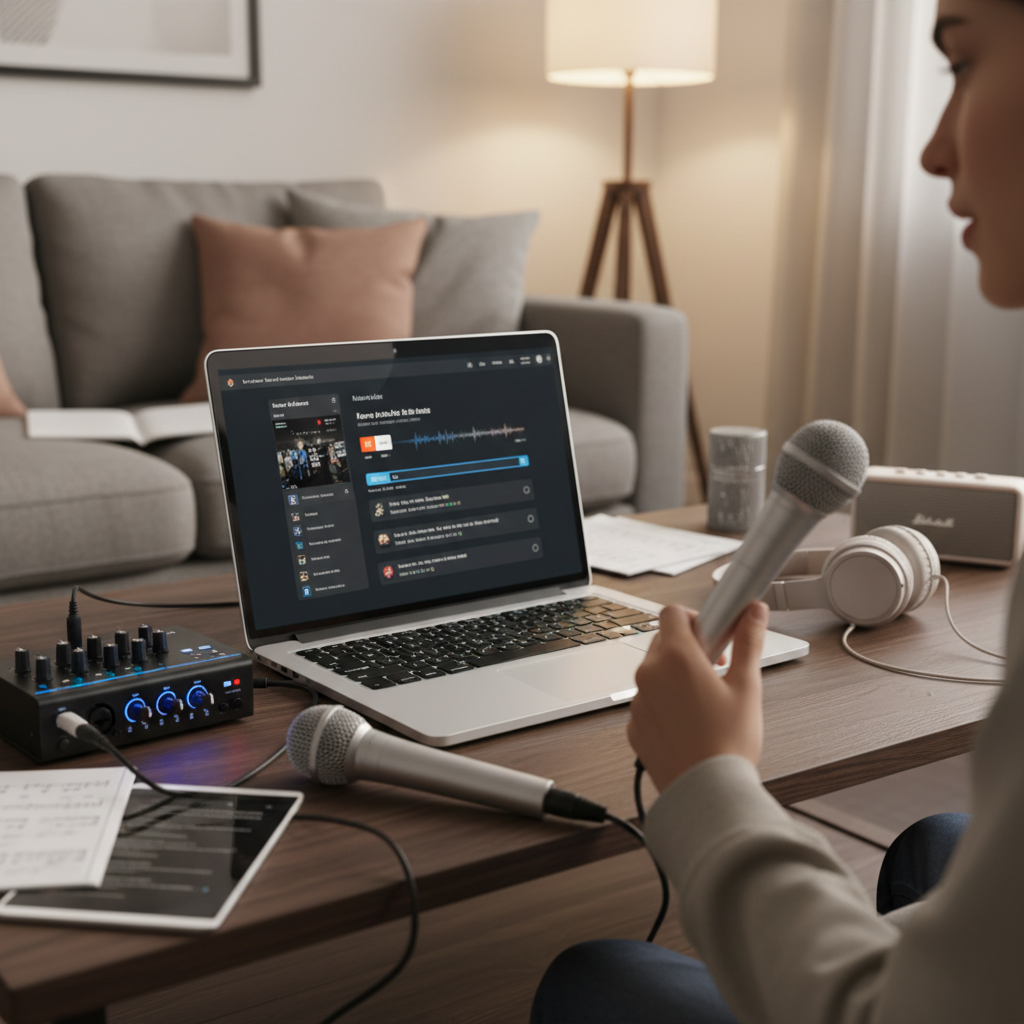
Are you looking to integrate your audio mixer with a soundbar, specifically utilizing an optical connection? While a direct optical output on most standard mixers is rare, achieving this setup is entirely possible with the right approach and a crucial piece of equipment. This guide will walk you through the essential components, a step-by-step connection process, and critical considerations to help you get the best sound from your system, turning your living room into an immersive audio space.
Understanding Optical Audio and Mixer Outputs
Before diving into the setup, it’s helpful to understand the nature of optical audio and the typical outputs found on audio mixers.
What is Optical Audio (Toslink/SPDIF)?
|
Our Picks for the Best Karaoke system in 2026
As an Amazon Associate I earn from qualifying purchases.
|
||
| Num | Product | Action |
|---|---|---|
| 1 | Ikarao Portable Karaoke Machine for Adults, Built-in Lyrics Display and Screen, 2 Self-Charging Wireless Microphones, Karaoke App, 140W Speaker, Connects to TV for Home Party Birthday Outdoor Camping |

|
| 2 | Ikarao Smart Karaoke Machine for Adults - with Lyrics Display, 32GB Karaoke Tablet, 2 Wireless Mics, Professional Karaoke System, 300W Peak Power, 4 DJ Lights, Karaoke Speaker for Any Occasion |
|
| 3 | JBL Wireless Two Microphone System with Dual-Channel Receiver, Black |
|
| 4 | Karaoke Machine, Portable Bluetooth 5.3 Speaker with 2 Wireless Microphones for Adults, PA System with Pitch Correction & Echo Adjustment, Supports TWS/TF Card/USB/AUX/Live for Home Party (2MICS) |
|
| 5 | Karaoke Machine, Portable Bluetooth Speaker with 2 Wireless Microphones for Adults & Kids with Lights, Karaoke Microphone with PA System Supports USB/TF/REC/FM/AUX for Home Party Home System Packages |
|
| 6 | Karaoke Soundbar with Subwoofer for TV: Sound Bar with 2 Wireless Microphones - Home Theater Surround Sound System - Bluetooth Speaker with Remote Supports HDMI ARC/Optical/AUX/USB for TV/PC |
|
| 7 | Karaoke Machine for Adults, Built-in 10.1" HD Lyrics Screen, Supports WiFi Bluetooth HDMI USB and TF, Portable Karaoke Player with 2 Wireless Microphones for Home Party Family Gathering |
|
| 8 | NBVOICE Professional Portable All-in-One Integrated 2-Way PA System Fixed Setup, Suitcase Design w/ 8-Channel Mixer, 2 Speaker Stands, Bluetooth, Mic for Performances, Presentations |
|
| 9 | Portable Karaoke Machine, with Wireless Microphones, Bluetooth Party Speaker with LED Lights, Loud Subwoofer, USB/AUX, Outdoor Karaoke Speaker for Adults & Kids, Home & Party |
|
| 10 | VOSOCO Karaoke Machine with 2 Wireless Microphones, Portable Bluetooth Speaker for Adults Kids, PA Systems Support TWS Echo Adjust TF USB AUX for Home Party Outdoor Travel |
|
Optical audio, also known as Toslink or S/PDIF (Sony/Philips Digital Interconnect Format), is a digital audio connection that transmits sound signals using pulses of light through a fiber optic cable. This method offers excellent immunity to electrical interference, which can sometimes plague traditional copper-based cables. Optical connections are primarily designed for audio only, meaning they do not transmit video signals like HDMI. Originally, optical cables were developed for stereo and basic surround sound formats. As such, they are generally limited to compressed 5.1 formats like Dolby Digital and DTS, and cannot handle the higher bandwidth required for uncompressed audio or advanced immersive formats like Dolby Atmos or DTS:X.
Common Mixer Outputs
Audio mixers are designed to combine multiple audio input signals and route them to various outputs. The most common outputs you’ll find on nearly any mixer are the main left and right (L/R) outputs. These are typically analog connections, such as XLR, 1/4-inch TRS (Tip-Ring-Sleeve), or RCA jacks. Other outputs might include auxiliary (AUX) sends for monitor speakers or effects processors, group outputs for controlling multiple channels together, and dedicated headphone outputs. The key takeaway here is that standard audio mixers almost exclusively deal in analog audio signals or, in some digital mixers, digital signals via USB or AES/EBU, but very rarely consumer-grade optical (Toslink) outputs.
Why a Direct Optical Connection from a Mixer is Uncommon
Given that most mixers provide analog outputs and soundbars typically feature optical inputs designed for digital audio from TVs or media players, a direct plug-and-play optical connection from a mixer to a soundbar is usually not feasible. Your mixer’s analog signal needs to be converted into a digital optical signal for your soundbar to understand it. This is where an additional device becomes essential.
Essential Equipment for Connecting Your Mixer to a Soundbar via Optical
To successfully connect your audio mixer to a soundbar using an optical cable, you will need more than just the mixer, soundbar, and optical cable. Here’s a rundown of the required components:
- Audio Mixer: Your primary device for combining and adjusting audio signals. Ensure it has standard analog outputs (e.g., RCA, 1/4-inch, or XLR).
- Soundbar with Optical Input: Verify that your soundbar has an optical digital audio input port, often labeled “Optical In,” “Digital In (Optical),” or “S/PDIF.”
- Optical (Toslink) Cable: This cable will transmit the digital audio signal from the converter to your soundbar.
- Analog-to-Digital Audio Converter (ADC): This is the most crucial piece of equipment. An ADC takes an analog audio signal (from your mixer) and converts it into a digital signal that can be transmitted via an optical cable. Look for converters with RCA or 3.5mm stereo inputs and a Toslink optical output. Some professional converters might accept XLR inputs.
- RCA or 1/4-inch TRS Cables: These cables will connect the analog outputs of your mixer to the analog inputs of the ADC.
Step-by-Step Guide: Connecting Your Mixer to a Soundbar via Optical
Now, let’s connect everything together to get your audio mixer playing through your soundbar.
Step 1: Prepare Your Equipment
Before making any connections, ensure all your devices (mixer, soundbar, and converter) are powered off. Gather your optical cable, analog cables (RCA or TRS), and your analog-to-digital converter. Remember to gently remove the protective plastic caps from both ends of your optical cable; these caps protect the delicate fiber optic ends.
Step 2: Connect Your Mixer to the Analog-to-Digital Converter
First, you need to get the audio from your mixer to the analog-to-digital converter.
- Locate the main stereo outputs on your audio mixer (usually labeled “Main Out,” “L/R Out,” or “Stereo Out”). These will typically be RCA, 1/4-inch, or XLR jacks.
- Connect appropriate analog cables (RCA-to-RCA, 1/4-inch-to-RCA, or XLR-to-RCA, depending on your mixer’s outputs and your converter’s inputs) from your mixer’s main outputs to the analog inputs on your analog-to-digital converter. Ensure you match the left (L) and right (R) channels correctly.
Step 3: Connect the Converter to the Soundbar via Optical
Next, connect the digital output from your converter to your soundbar.
- Take one end of the optical (Toslink) cable and plug it into the optical output port on your analog-to-digital converter.
- Take the other end of the optical cable and carefully plug it into the optical input port on your soundbar. The connector is keyed, so ensure it lines up correctly before gently pushing it in until you hear or feel a slight click. Never force an optical cable, as the delicate fibers can easily be damaged. If your soundbar has a protective plug in its optical input, remove it first.
Step 4: Power On Devices and Select Input
With all cables securely connected, it’s time to power on your system.
- First, power on your audio mixer.
- Then, power on your analog-to-digital converter (if it has a separate power supply).
- Finally, power on your soundbar.
- On your soundbar, use its remote or control panel to select the correct input source. This will be the optical input, which might be labeled “Optical,” “Digital In,” “D.IN,” or similar. Refer to your soundbar’s manual if you’re unsure.
Step 5: Adjust Audio Settings
Now, play some audio through your mixer and listen for it on your soundbar.
- Start with the volume low on both your mixer and soundbar, then gradually increase them to a comfortable listening level.
- On your mixer, ensure your input channels are properly routed to the main outputs and the master fader is up.
- On some soundbars, you might have audio settings that allow you to choose between PCM (Pulse Code Modulation) or Bitstream (Dolby Digital/DTS) for the optical input. For general mixer output, PCM stereo is usually the most compatible and reliable setting.
Optimizing Your Optical Audio Experience
Even with the connection established, a few tips can help you get the most out of your setup:
- Check Soundbar Settings: Explore your soundbar’s audio settings. Some soundbars allow you to adjust EQ or sound modes, which can enhance the mixer’s output for music or voice.
- Protect Optical Cables: Optical cables are more delicate than copper ones. Avoid sharp bends or kinks, as this can damage the internal fiber and interrupt the signal. Keep unused ends capped to protect them from dust.
- Separate Volume Control: Be aware that connecting via optical often means you’ll need to use your soundbar’s remote or controls to adjust its volume, rather than your TV remote (if the soundbar is also connected to a TV via optical). This is because optical connections typically don’t transmit Consumer Electronics Control (CEC) commands.
- Experiment with Gain Staging: Properly set the gain levels on your mixer to avoid sending too hot a signal to the converter, which could lead to distortion, or too weak a signal, which could introduce noise.
Limitations of Optical Connection for Mixer to Soundbar
While optical provides a clean digital audio path, it’s important to be aware of its inherent limitations when connecting a mixer to a soundbar:
- No Advanced Surround Sound: Optical cables cannot transmit lossless or uncompressed surround sound formats like Dolby TrueHD, DTS-HD Master Audio, or advanced immersive formats like Dolby Atmos and DTS:X. The audio will be limited to stereo PCM or compressed 5.1 Dolby Digital/DTS. If your mixer is primarily for music or mono/stereo vocals, this may not be a significant issue.
- Stereo or Compressed 5.1 Only: For most mixer applications, you’ll be sending a stereo signal. The optical cable can handle this perfectly well. However, if you were hoping for a multi-channel, uncompressed output, optical would fall short.
- Lack of HDMI CEC: As mentioned, optical cables do not carry CEC signals, meaning you lose the convenience of controlling your soundbar’s volume or power with a universal remote or TV remote.
- Fragility: The fiber optic core of these cables makes them less flexible and more prone to damage if bent sharply compared to traditional copper cables.
When to Consider Alternative Connections
While optical serves a purpose, if your primary goal is the highest fidelity, multi-channel audio, or seamless control, consider alternatives:
- HDMI ARC/eARC: If your soundbar and mixer (or source device connected to the mixer) have HDMI ARC (Audio Return Channel) or especially eARC (enhanced Audio Return Channel) ports, this is generally the superior choice. HDMI ARC/eARC offers higher bandwidth, support for advanced audio formats, and CEC control for integrated system management. However, finding a mixer with HDMI ARC output is highly unlikely.
- Bluetooth: For casual listening or if both your mixer and soundbar support Bluetooth, this wireless option can provide convenience, though often at the cost of audio quality and with potential latency.
Conclusion
Connecting your audio mixer to a soundbar via optical, while not a direct plug-and-play solution, is certainly achievable through the use of an analog-to-digital converter. This setup allows you to leverage your soundbar’s enhanced audio capabilities for your mixer’s output, whether for karaoke, instruments, or voice. While optical connections come with limitations regarding advanced audio formats and control, they offer a reliable and interference-free way to enjoy clear digital sound. By understanding the necessary components and following these steps, you can confidently integrate your mixer into your home audio system. Take your time, ensure all connections are secure, and prepare to elevate your sound experience.
Frequently Asked Questions
Why can’t I directly connect my audio mixer to a soundbar via optical?
Most audio mixers output analog audio signals (e.g., via RCA, 1/4-inch, or XLR jacks), while soundbars’ optical inputs are designed for digital audio. A direct connection is not possible because the signal types are incompatible without conversion.
What kind of converter do I need to connect a mixer to a soundbar via optical?
You need an Analog-to-Digital Audio Converter (ADC). This device takes the analog signal from your mixer and transforms it into a digital optical (Toslink) signal that your soundbar can recognize and play.
Will I get surround sound if I connect my mixer to a soundbar via optical?
Optical cables are limited to transmitting compressed 5.1 surround sound formats (like Dolby Digital or DTS) or uncompressed stereo PCM. They cannot handle advanced, lossless formats such as Dolby Atmos or DTS:X, so your mixer’s output will be limited to these capabilities.
Can I control my soundbar’s volume with my TV remote when using an optical connection?
Typically, no. Optical connections do not support HDMI CEC (Consumer Electronics Control), which is the feature that allows your TV remote to control other connected devices. You will likely need to use your soundbar’s dedicated remote for volume adjustments.
Are optical cables prone to damage?
Yes, optical cables use delicate fiber optics and are more fragile than standard copper cables. They can be permanently damaged if bent too sharply or kinked, so handle them with care and avoid tight turns during installation.