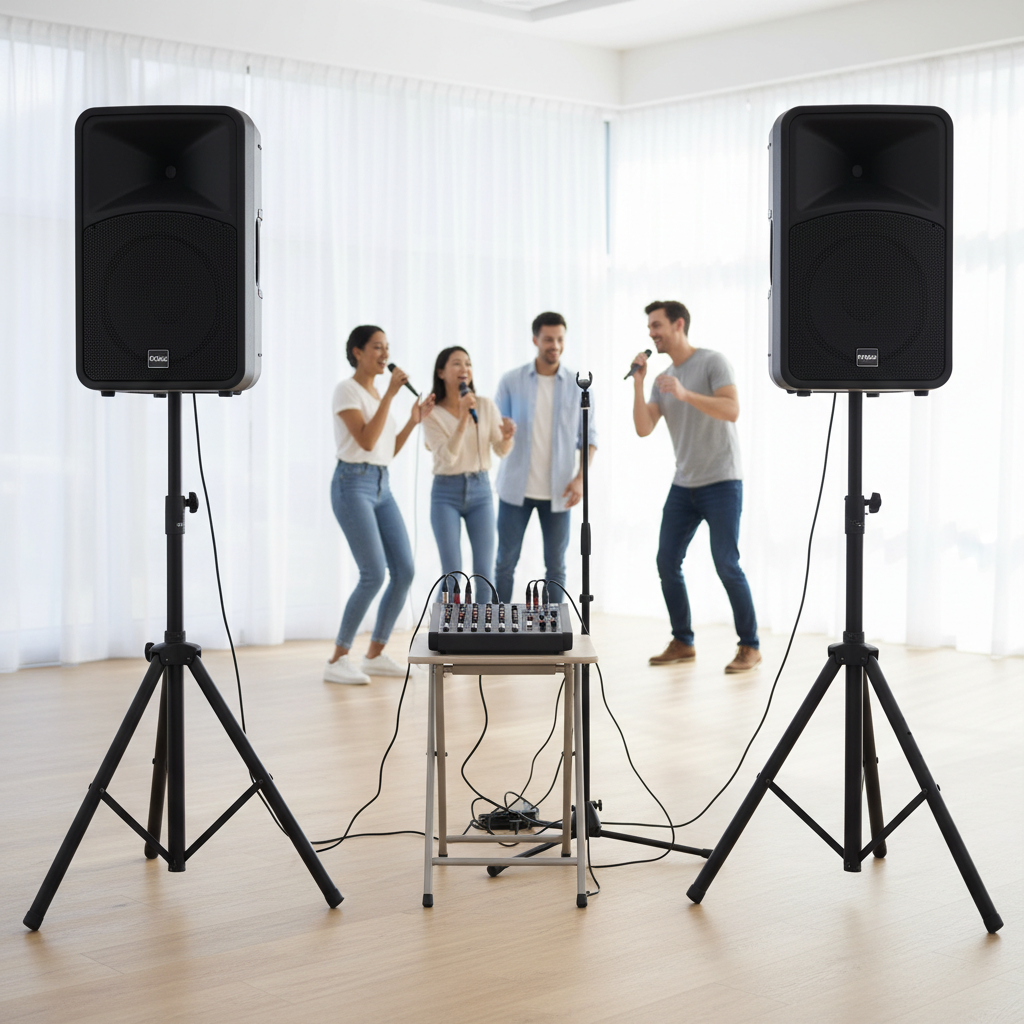
Stepping onto the stage, or even just into your living room with a microphone in hand, there’s an unspoken expectation: your voice will be heard, clear and true. For decades, one microphone has consistently answered that call, becoming an icon in countless venues, studios, and, yes, karaoke nights worldwide. The Shure SM58 isn’t just a microphone; it’s a legend, often hailed as the “karaoke standard.” But does this workhorse truly live up to its reputation for your vocal performances? We’ll dive deep into its features, performance, and how it stacks up, helping you decide if this classic is the perfect partner for your next singing session.
Factors to Consider When Choosing a Karaoke Microphone
Selecting the right microphone is crucial for an enjoyable karaoke experience, influencing everything from your vocal clarity to your performance freedom. Before diving into specific models, consider these essential factors to ensure your choice aligns with your needs.
Sound Quality and Clarity
|
Our Picks for the Best Karaoke system in 2026
As an Amazon Associate I earn from qualifying purchases.
|
||
| Num | Product | Action |
|---|---|---|
| 1 | Karaoke Machine, Portable Bluetooth Speaker with 2 Wireless Microphones for Adults & Kids with Lights, Karaoke Microphone with PA System Supports USB/TF/REC/FM/AUX for Home Party Home System Packages |

|
| 2 | VOSOCO Karaoke Machine with 2 Wireless Microphones, Portable Bluetooth Speaker for Adults Kids, PA Systems Support TWS Echo Adjust TF USB AUX for Home Party Outdoor Travel |
|
| 3 | Portable Karaoke Machine, with Wireless Microphones, Bluetooth Party Speaker with LED Lights, Loud Subwoofer, USB/AUX, Outdoor Karaoke Speaker for Adults & Kids, Home & Party |
|
| 4 | NBVOICE Professional Portable All-in-One Integrated 2-Way PA System Fixed Setup, Suitcase Design w/ 8-Channel Mixer, 2 Speaker Stands, Bluetooth, Mic for Performances, Presentations |
|
| 5 | Karaoke Machine, Portable Bluetooth 5.3 Speaker with 2 Wireless Microphones for Adults, PA System with Pitch Correction & Echo Adjustment, Supports TWS/TF Card/USB/AUX/Live for Home Party (2MICS) |
|
| 6 | Ikarao Portable Karaoke Machine for Adults, Built-in Lyrics Display and Screen, 2 Self-Charging Wireless Microphones, Karaoke App, 140W Speaker, Connects to TV for Home Party Birthday Outdoor Camping |
|
| 7 | Ikarao Smart Karaoke Machine for Adults - with Lyrics Display, 32GB Karaoke Tablet, 2 Wireless Mics, Professional Karaoke System, 300W Peak Power, 4 DJ Lights, Karaoke Speaker for Any Occasion |
|
| 8 | Karaoke Soundbar with Subwoofer for TV: Sound Bar with 2 Wireless Microphones - Home Theater Surround Sound System - Bluetooth Speaker with Remote Supports HDMI ARC/Optical/AUX/USB for TV/PC |
|
| 9 | JBL Wireless Two Microphone System with Dual-Channel Receiver, Black |
|
| 10 | Karaoke Machine for Adults, Built-in 10.1" HD Lyrics Screen, Supports WiFi Bluetooth HDMI USB and TF, Portable Karaoke Player with 2 Wireless Microphones for Home Party Family Gathering |
|
At the heart of any great microphone is its ability to capture your voice accurately. For karaoke, you need a mic that delivers rich, natural vocals without distortion, ensuring your voice shines through the music. A balanced sound profile, with clear highs and deep lows, helps every note hit its mark.
Durability for Lively Performances
Karaoke nights can get enthusiastic, and microphones often bear the brunt of lively celebrations. A durable microphone, built to withstand accidental drops, enthusiastic handling, and the general wear and tear of frequent use, is an invaluable asset. You want a mic that can keep performing reliably, gig after gig.
Effective Noise Rejection
Few things disrupt a karaoke performance like unwanted background noise or feedback. A good karaoke microphone should feature a polar pattern that effectively isolates your vocals while minimizing extraneous sounds from the crowd, speakers, or even your breathing. This ensures a clean vocal signal and prevents those dreaded squeals of feedback.
Ease of Use and Connectivity
Consider how easily the microphone integrates into your existing karaoke setup. Some microphones offer simple plug-and-play USB connectivity, while others require additional equipment like XLR cables and audio interfaces. Your technical comfort level and the complexity of your setup should guide this decision.
Mobility: Wired vs. Wireless
Do you prefer to stay put or move around the room as you sing? Wired microphones offer reliable, consistent audio quality with no battery concerns, but restrict movement. Wireless microphones provide freedom on stage but require power management and can sometimes be susceptible to interference.
Budget
Microphone prices vary widely. Determine your budget upfront, but remember that investing in a quality microphone can significantly enhance your karaoke experience and save you money on replacements in the long run.
Key Features and Specifications of the Shure SM58
The Shure SM58’s enduring popularity isn’t accidental; it’s a direct result of its carefully engineered features designed for vocal excellence.
The SM58 is a dynamic microphone, meaning it uses electromagnetic induction to convert sound waves into electrical signals. This design makes it robust and less susceptible to humidity, making it ideal for live use. It features a cardioid polar pattern, which primarily picks up sound from the front of the microphone while rejecting sounds from the sides and rear. This characteristic is vital for isolating vocals and reducing feedback in live environments.
Its frequency response spans from 50Hz to 15,000Hz, optimized to deliver clear, warm lead and backup vocals. The microphone boasts a built-in spherical pop filter, which significantly reduces “plosive” sounds (like “p” and “b”) and wind noise, improving overall audio clarity without needing external accessories. An advanced pneumatic shock mount system is integrated into its design, effectively minimizing handling noise and vibrations, ensuring only your voice is amplified.
Constructed with a dark gray, enamel-painted, die-cast metal housing and a matte-finished, silver-colored, spherical steel mesh grille, the SM58 is famously rugged. This “built like a tank” construction allows it to withstand drops, bumps, and the rigors of touring or energetic karaoke nights. Connectivity is handled via a standard 3-pin XLR connector, ensuring compatibility with professional audio equipment. Weighing approximately 298 grams (about 0.65 lbs), it feels solid and comfortable in hand.
Why the Shure SM58 Excels as a Karaoke Microphone
The Shure SM58 has earned its “karaoke standard” moniker through a combination of unwavering performance, durability, and vocal optimization that directly benefits singers of all skill levels.
Exceptional Vocal Clarity and Warmth
The SM58 is renowned for its ability to reproduce vocals with remarkable clarity and a pleasant warmth. Its tailored frequency response emphasizes the mid-range frequencies where the human voice naturally sits, making vocals cut through the music mix without sounding harsh or thin. Singers find their voices sound natural and robust, boosting confidence during a performance.
Superior Feedback Rejection and Noise Isolation
Thanks to its precise cardioid polar pattern, the SM58 is highly effective at rejecting sounds from the sides and rear. This focused pickup pattern is a game-changer for karaoke, minimizing the dreaded feedback loops that can plague live sound systems. It also reduces ambient room noise, ensuring that the audience hears your voice, not the chatter or background music. The integrated pop filter further refines the sound by reducing breath noises and plosives.
Legendary Durability: “Built like a Tank”
Karaoke environments, whether a professional stage or a lively home party, can be unpredictable. The SM58’s robust construction, featuring a die-cast metal body and a hardened steel mesh grille, allows it to endure rough handling, accidental drops, and general wear that would sideline lesser microphones. Many audio professionals can attest to SM58s surviving decades of abuse, making it a reliable, long-term investment for any karaoke enthusiast.
Consistent Performance
One of the most valuable traits of the Shure SM58 is its consistency. You can pick up any SM58, anywhere in the world, and expect the same high-quality sound and reliable performance. This uniformity is crucial for karaoke hosts and singers who demand predictable results, ensuring every performance sounds as good as the last.
Shure SM58 vs. Competitors: A Head-to-Head Comparison
While the Shure SM58 holds a revered spot, understanding how it compares to other popular microphones helps in making an informed choice, especially for specific karaoke needs.
Shure SM58 vs. Shure Beta 58A
The Shure Beta 58A is often considered the SM58’s “upgraded” sibling. It features a supercardioid polar pattern, which offers even tighter off-axis rejection than the SM58’s cardioid, providing superior feedback resistance in very loud environments. The Beta 58A also has a neodymium magnet, resulting in a slightly hotter output and an extended low-end and high-end frequency response, which some vocalists find provides a brighter, more detailed sound. Its hardened grille and improved pneumatic shock mount also contribute to slightly enhanced durability and reduced handling noise. For professional vocalists in challenging acoustic spaces, the Beta 58A might offer a slight edge, but for most karaoke applications, the SM58’s performance is more than sufficient.
Shure SM58 vs. Budget Wireless Microphones (e.g., TONOR TW820)
Budget wireless systems like the TONOR TW820 offer the distinct advantage of mobility, freeing singers from cables. However, they typically come with trade-offs in sound quality and durability. While convenient for casual home use, the audio clarity and robust build of an SM58 often surpass these cheaper wireless alternatives. Wireless systems also introduce concerns about battery life, signal interference, and regulatory compliance. If mobility is your absolute top priority and budget is tight, a wireless option might appeal, but for pure sound quality and reliability, the wired SM58 often wins.
Shure SM58 vs. USB Microphones (e.g., FIFINE K669B)
USB microphones like the FIFINE K669B are designed for simplicity, offering plug-and-play connectivity directly to a computer without needing an audio interface or XLR cables. This makes them highly convenient for casual home recording or streaming. However, for a traditional karaoke setup, which often involves a mixer or amplifier, a USB microphone may not be compatible without adapters, adding complexity rather than reducing it. While some USB mics offer decent sound, the SM58 is engineered specifically for vocal performance in live settings, offering superior dynamic range and feedback control.
Detailed Comparison Table: Shure SM58 vs. Popular Alternatives
| Feature | Shure SM58 | Shure Beta 58A | TONOR TW820 (Example) | FIFINE K669B (Example) |
|---|---|---|---|---|
| Type | Dynamic, Wired | Dynamic, Wired (often wireless packs available) | Dynamic, Wireless | Condenser, USB |
| Polar Pattern | Cardioid | Supercardioid | Cardioid | Cardioid |
| Sound Quality | Excellent, warm, clear vocals | Excellent, brighter, more detailed | Decent | Good for spoken word |
| Durability | Legendary (“tank-like”) | Excellent, slightly more robust | Moderate | Moderate |
| Noise Rejection | Superior | Even better | Good | Good |
| Connectivity | XLR | XLR | Wireless (UHF) | USB |
| Price Range | $99-$150 | $150-$200+ | $50-$80 | $30-$50 |
| Best For | Serious karaoke, live vocals, general use | Professional vocalists, challenging acoustic environments | Mobility, casual home karaoke | Budget-friendly, plug-and-play, streaming |
Choosing the Right Microphone for Your Karaoke Needs (Is the SM58 Right for You?)
With so many options available, finding the ideal microphone can feel daunting. However, by asking yourself a few key questions, you can quickly determine if the Shure SM58 is the perfect fit for your karaoke ambitions.
Determine Your Budget
While the SM58 is a premium microphone, its price point of around $100-$150 makes it an accessible professional-grade option. If your budget allows for this investment, the SM58 offers unparalleled value for its durability and sound quality. If your budget is significantly lower, you might consider entry-level dynamic mics or a basic USB microphone, but be prepared for potential compromises in performance and longevity.
Identify Your Usage Space and Purpose
Are you planning for casual home karaoke in a small room, or do you aspire to host larger parties, perhaps even in semi-professional settings? The SM58 excels in both. Its excellent feedback rejection makes it ideal for rooms with challenging acoustics or loud sound systems, while its robust build is perfect for shared use in lively environments. For simple, quiet home use, other options might suffice, but for versatility and consistent quality, the SM58 is hard to beat.
Prioritize Sound Quality vs. Mobility
The SM58 is a wired microphone, offering rock-solid audio transmission without interference. This means you’ll need an XLR cable and potentially a mixer or audio interface. If the highest possible sound quality and reliability are your top priorities, and you don’t mind being tethered, the SM58 is an excellent choice. If complete freedom of movement is paramount, a quality wireless system might be a better (though often more expensive) investment, potentially looking at a wireless version of the SM58 or Beta 58A.
Don’t Forget Necessary Accessories
To get the most out of your Shure SM58, you’ll need a few essential accessories. An XLR cable is mandatory to connect it to your sound system, mixer, or audio interface. A sturdy microphone stand can provide hands-free convenience, and a pop filter (though one is built-in, an external one can offer even more plosive reduction) can further enhance vocal clarity. Ensure your existing karaoke setup has the necessary inputs or plan to acquire compatible equipment.
Common Issues with Karaoke Microphones and How to Troubleshoot Them (Applicable to SM58)
Even with a reliable microphone like the Shure SM58, you might encounter occasional issues. Knowing how to quickly troubleshoot common problems can keep your karaoke night running smoothly.
Feedback/Squealing
Problem: A high-pitched squeal or hum.
Cause: Microphone too close to speakers, gain (volume) too high, or mic pointing directly at a speaker.
Solution:
- Reposition: Move the microphone further away from speakers or change its angle.
- Reduce Gain: Lower the microphone’s volume on your mixer or amplifier.
- Equalization: Slightly cut problematic frequencies (often around 2-4 kHz) if your mixer has EQ.
- Polar Pattern: Ensure you’re utilizing the mic’s cardioid pattern by singing directly into the top, not cupping the grille.
Muffled or Unclear Sound
Problem: Vocals sound muddy, indistinct, or lack brightness.
Cause: Incorrect microphone technique, built-in pop filter clogged, or incorrect EQ settings.
Solution:
- Mic Technique: Hold the microphone about 2-6 inches from your mouth, singing directly into the top. Avoid cupping the grille, which can affect frequency response.
- Check Pop Filter/Grille: Ensure the grille isn’t damaged or clogged with debris. For extreme clarity, an external pop filter can help.
- EQ Adjustment: On your mixer, try slightly boosting high frequencies (e.g., 8-10 kHz) for more presence and clarity, and cutting low-mids (e.g., 200-500 Hz) to reduce muddiness.
Connectivity Problems
Problem: No sound or intermittent sound from the microphone.
Cause: Loose or faulty cables, incorrect input selection, or equipment not powered on.
Solution:
- Check Cables: Ensure all XLR cables are securely plugged in at both ends. Try swapping cables to rule out a faulty one.
- Verify Inputs: Make sure the microphone is connected to the correct input on your mixer or audio interface, and that the input is selected and unmuted.
- Power: Confirm that your mixer, amplifier, or audio interface is powered on. (The SM58 is a dynamic mic and does not require phantom power, but ensure it’s not accidentally enabled on its input if your mixer has that feature, as it won’t harm the SM58 but isn’t necessary.)
Excessive Handling Noise
Problem: Loud thumps or rubs when the microphone is moved or held.
Cause: Lack of a good internal shock mount or improper handling.
Solution:
- Internal Shock Mount: The SM58 has an excellent internal pneumatic shock mount, which minimizes handling noise. If you’re experiencing excessive noise, ensure you’re not gripping the mic too tightly or rubbing your hand on the grille.
- Mic Clip/Stand: Use a quality microphone clip and stand to absorb vibrations if you’re not holding the mic.
Conclusion
The Shure SM58 has undeniably earned its place as a legendary vocal microphone, and for good reason. Its exceptional clarity, robust durability, and superior feedback rejection make it an ideal choice for virtually any singing application, from professional live performances to spirited karaoke nights. While newer microphones offer features like wireless connectivity or USB plug-and-play simplicity, few can match the SM58’s consistent, high-quality vocal reproduction and its “built like a tank” reliability. If you’re serious about your sound and seek a microphone that will deliver dependable, professional-grade audio for years to come, the Shure SM58 isn’t just a strong contender—it’s the benchmark. So, is it the undisputed karaoke standard? For quality, reliability, and sheer performance value, it certainly holds that crown for many.
What experiences have you had with the Shure SM58, and what makes a microphone truly “standard” in your karaoke setup?
Frequently Asked Questions
Is the Shure SM58 good for home karaoke?
Absolutely! The Shure SM58 is an excellent choice for home karaoke due to its exceptional vocal clarity, natural sound reproduction, and superior ability to reject background noise and feedback. Its legendary durability also means it can withstand enthusiastic handling during lively home performances, making it a reliable long-term investment.
What’s the main difference between Shure SM58 and Beta 58A for karaoke?
The primary differences are the polar pattern and sensitivity. The Beta 58A has a tighter supercardioid pattern, offering even greater feedback rejection, and a slightly hotter output with an extended frequency response, which some find provides a brighter sound. While the Beta 58A is technically a step up for professional vocalists in challenging environments, the SM58 remains more than sufficient and often preferred for most karaoke settings.
Do I need extra equipment to use a Shure SM58 for karaoke?
Yes, the Shure SM58 uses an XLR connector, so you’ll need an XLR cable to connect it to a mixer, amplifier, or audio interface. Unlike USB microphones, it’s not a direct plug-and-play device for computers. Ensure your karaoke system has an XLR input and the necessary amplification to power this dynamic microphone.
How durable is the Shure SM58?
The Shure SM58 is renowned for its legendary durability. Its robust, all-metal construction and hardened steel mesh grille allow it to withstand significant abuse, including drops, bumps, and constant handling, without compromising performance. Many users report their SM58s lasting for decades, making it a highly reliable microphone for any setting.
Can the Shure SM58 be used wirelessly for karaoke?
Yes, the Shure SM58 capsule is available as part of Shure’s wireless microphone systems (e.g., BLX, SLX-D, QLX-D). When purchased as a wireless package, it offers the same great sound quality with the added freedom of movement. However, a standard wired SM58 cannot be converted to wireless without purchasing a dedicated wireless transmitter and receiver system.