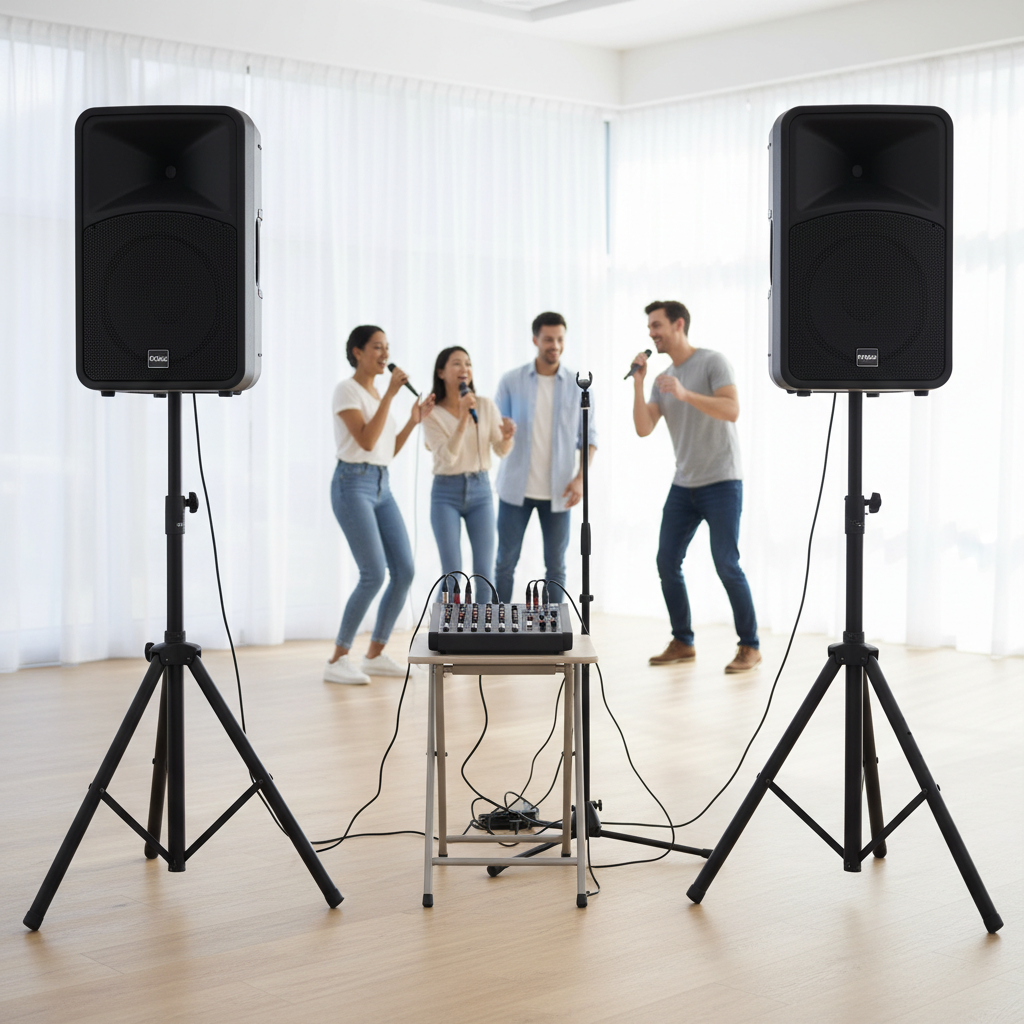
For any vocalist, whether belting out anthems on stage or crafting intricate harmonies in a home studio, the microphone is the direct conduit to their audience. The choice between a wired dynamic microphone and a wired condenser microphone for vocals is a fundamental decision that profoundly shapes the final sound. It’s not about one being inherently “better” than the other, but rather understanding their distinct characteristics and matching them to your specific needs and environment. This guide will demystify these two primary microphone types, helping you make an informed choice like a seasoned audio professional.
Understanding Microphone Fundamentals: How Sound Becomes Signal
|
Our Picks for the Best Karaoke system in 2026
As an Amazon Associate I earn from qualifying purchases.
|
||
| Num | Product | Action |
|---|---|---|
| 1 | Karaoke Machine, Portable Bluetooth 5.3 Speaker with 2 Wireless Microphones for Adults, PA System with Pitch Correction & Echo Adjustment, Supports TWS/TF Card/USB/AUX/Live for Home Party (2MICS) |

|
| 2 | Karaoke Machine for Adults, Built-in 10.1" HD Lyrics Screen, Supports WiFi Bluetooth HDMI USB and TF, Portable Karaoke Player with 2 Wireless Microphones for Home Party Family Gathering |
|
| 3 | JBL Wireless Two Microphone System with Dual-Channel Receiver, Black |
|
| 4 | Karaoke Machine, Portable Bluetooth Speaker with 2 Wireless Microphones for Adults & Kids with Lights, Karaoke Microphone with PA System Supports USB/TF/REC/FM/AUX for Home Party Home System Packages |
|
| 5 | NBVOICE Professional Portable All-in-One Integrated 2-Way PA System Fixed Setup, Suitcase Design w/ 8-Channel Mixer, 2 Speaker Stands, Bluetooth, Mic for Performances, Presentations |
|
| 6 | Karaoke Soundbar with Subwoofer for TV: Sound Bar with 2 Wireless Microphones - Home Theater Surround Sound System - Bluetooth Speaker with Remote Supports HDMI ARC/Optical/AUX/USB for TV/PC |
|
| 7 | VOSOCO Karaoke Machine with 2 Wireless Microphones, Portable Bluetooth Speaker for Adults Kids, PA Systems Support TWS Echo Adjust TF USB AUX for Home Party Outdoor Travel |
|
| 8 | Ikarao Portable Karaoke Machine for Adults, Built-in Lyrics Display and Screen, 2 Self-Charging Wireless Microphones, Karaoke App, 140W Speaker, Connects to TV for Home Party Birthday Outdoor Camping |
|
| 9 | Portable Karaoke Machine, with Wireless Microphones, Bluetooth Party Speaker with LED Lights, Loud Subwoofer, USB/AUX, Outdoor Karaoke Speaker for Adults & Kids, Home & Party |
|
| 10 | Ikarao Smart Karaoke Machine for Adults - with Lyrics Display, 32GB Karaoke Tablet, 2 Wireless Mics, Professional Karaoke System, 300W Peak Power, 4 DJ Lights, Karaoke Speaker for Any Occasion |
|
At its core, any microphone is a transducer – a device that converts sound waves (acoustic energy) into an electrical signal. Dynamic and condenser microphones achieve this transformation using fundamentally different operating principles, which in turn dictate their sound characteristics and ideal applications. Understanding these mechanics is the first step to mastering your vocal sound.
Dynamic Microphones: The Workhorse of Vocals
Dynamic microphones are often considered the workhorses of the audio world, prized for their ruggedness and ability to handle high sound levels.
How Dynamic Mics Work
A dynamic microphone operates on the principle of electromagnetic induction. Sound waves strike a thin, lightweight diaphragm, which is attached to a coil of wire. This coil is suspended within a magnetic field. As the diaphragm vibrates in response to sound, the coil moves back and forth within the magnetic field, generating an electrical current that mirrors the incoming sound waves. This simple yet effective design makes them incredibly reliable.
Key Characteristics:
- Low Sensitivity: Dynamic mics are less sensitive to subtle sound variations and ambient noise. This is a significant advantage in noisy environments, as they primarily pick up what’s directly in front of them.
- Robust and Durable Construction: Built to withstand the rigors of live performance and rough handling, dynamic microphones are known for their physical resilience.
- High Sound Pressure Level (SPL) Handling: They can tolerate very loud sound sources, like powerful vocals or close-miked instruments, without distortion.
- Excellent Background Noise Rejection: Their lower sensitivity and typical cardioid or supercardioid polar patterns make them adept at isolating the main vocal source, reducing bleed from other instruments or room ambience.
- No Phantom Power Required: Dynamic microphones are passive devices and do not require external power to operate, making them simpler to set up with most audio interfaces and mixers.
- Often Requires More Preamp Gain: Due to their lower output signal, dynamic mics often need more amplification from a preamplifier to achieve a healthy recording level.
Best Use Cases for Vocals:
- Live Performances: Their durability and ability to reject stage bleed make them the go-to choice for concerts, rehearsals, and public speaking.
- Untreated or Noisy Recording Environments: For home studios without acoustic treatment, a dynamic mic can help minimize room reflections, keyboard clicks, or HVAC noise, delivering a cleaner vocal track.
- Loud, Powerful Vocal Styles: Singers with strong voices, belters, or those performing genres like rock, metal, or pop often benefit from a dynamic mic’s ability to handle high SPLs without harshness.
- Aggressive Vocalists: The “warm” and sometimes “less harsh” sound of a dynamic mic can complement voices that might otherwise sound too bright or sibilant on a condenser.
- Podcasting and Voiceover: Many broadcast studios use dynamic microphones for live sessions due to their consistent sound and ability to focus on the voice, even in less-than-perfect acoustic spaces.
Dynamic Mic Pros & Cons for Vocals
| Pros | Cons |
|---|---|
| Highly durable and reliable | Less detailed sound capture |
| Excellent rejection of background noise | Narrower frequency response |
| Handles high SPLs without distortion | Often requires more preamp gain |
| No phantom power needed (simpler setup) | Can lack “air” or sparkle in the high end |
| Warm, focused, and punchy sound character | May not capture subtle vocal nuances as well |
| Generally more affordable for quality models |
Condenser Microphones: Capturing Every Detail
Condenser microphones are synonymous with studio recording, revered for their ability to capture intricate details and a wide frequency range.
How Condenser Mics Work:
Condenser microphones operate on an electrostatic principle. They feature a thin, electrically charged diaphragm positioned very close to a fixed metal backplate. This arrangement creates a capacitor (an older term for which is “condenser”). When sound waves cause the diaphragm to vibrate, the distance between the diaphragm and the backplate changes, which alters the capacitance. This change in capacitance is then converted into an electrical signal. Because of their design, condenser microphones require external power, typically 48V phantom power, to energize the capsule and internal electronics.
Key Characteristics:
- High Sensitivity: Condenser mics are incredibly sensitive, picking up the most subtle nuances and transients in a vocal performance.
- Wide and Flat Frequency Response: They offer a broad, accurate frequency response, reproducing both very low and very high frequencies with great precision, resulting in a transparent and natural sound.
- Exceptional Detail and Clarity: Their ability to capture fine sonic details makes them ideal for intricate vocal work, delicate singing, or capturing the “air” around a voice.
- Fast Transient Response: The lightweight diaphragm reacts quickly to changes in sound pressure, capturing the attack and decay of notes with great accuracy.
- More Delicate Construction: Due to their intricate internal electronics and thin diaphragms, condenser microphones are generally more fragile and less forgiving of physical shock or extreme environmental conditions.
- Picks Up More Room Ambiance: Their high sensitivity means they will capture not only the vocal performance but also the acoustic characteristics of the recording space, including reflections and background noise.
Best Use Cases for Vocals:
- Treated Studio Environments: Condensers truly shine in acoustically treated rooms where unwanted reflections and noise are minimized, allowing their detail-capturing ability to be fully realized.
- Capturing Subtle Vocal Nuances: For genres requiring high fidelity, breath control, and intricate vocal textures, a condenser microphone excels at bringing out every subtle detail.
- Soft or Delicate Vocal Performances: Singers with quiet voices or those performing intimate genres like jazz, folk, or classical benefit from the condenser’s high sensitivity to capture their full dynamic range.
- Broadcasting and Professional Voiceover: In controlled studio settings, large-diaphragm condensers are favored for their rich, detailed vocal reproduction for radio, commercials, and audiobooks.
Condenser Mic Pros & Cons for Vocals
| Pros | Cons |
|---|---|
| Highly sensitive, captures fine details | Requires 48V phantom power |
| Wide and flat frequency response (natural sound) | More delicate construction, less durable |
| Excellent clarity and transparency | Highly sensitive to room noise and acoustics |
| Fast transient response | Can be prone to distortion with extremely high SPLs |
| Often provides a “cleaner” recording | Higher quality models can be significantly more expensive |
Dynamic vs. Condenser for Vocals: A Direct Comparison
Choosing between a dynamic and condenser microphone for your vocals boils down to understanding their fundamental differences and how they align with your specific performance or recording situation.
| Feature | Dynamic Microphones | Condenser Microphones |
|---|---|---|
| Operating Principle | Moving coil in magnetic field | Electrically charged diaphragm/backplate (capacitor) |
| Sensitivity | Low (less susceptible to room noise) | High (captures fine details and room ambiance) |
| Frequency Response | Narrower, often with specific coloration | Wider, flatter, more transparent |
| SPL Handling | Very high (ideal for loud sources like rock vocals) | Generally lower (can distort with extremely loud sources) |
| Durability | Very robust, withstands abuse (ideal for live use) | More delicate, sensitive to physical shock/environment |
| Power Requirement | None (passive) | Requires 48V Phantom Power |
| Preamplifier Gain | Often requires more gain for a strong signal | Higher output, generally requires less gain |
| Ideal Environment | Live stages, untreated rooms, noisy environments | Acoustically treated studios |
| Vocal Style | Loud, powerful, aggressive, rock, pop, live vocals | Soft, nuanced, detailed, intimate, studio vocals |
| Sound Character | Warm, punchy, focused, less harsh | Clear, transparent, detailed, airy, pristine |
| Cost | Generally more affordable for quality models | Can be more expensive, especially for studio-grade quality |
Choosing the Right Mic for Your Vocal Needs
Making the best choice requires a self-assessment of your unique circumstances:
- Consider Your Environment: If you’re singing live on a noisy stage or recording in an untreated bedroom, a dynamic mic will be your best friend. Its ability to reject ambient noise helps focus on your voice. For a professionally treated studio, a condenser mic will truly shine, capturing the full detail of your performance without picking up unwanted room sound.
- Analyze Your Vocal Style: Are you a powerhouse vocalist who needs a mic to handle your raw energy without distortion? A dynamic mic might smooth out harshness. Do you sing softly, with intricate melodic runs and delicate breath control? A condenser will capture those subtle nuances with pristine clarity.
- Budget & Equipment: Dynamic mics often offer a high return on investment for home studios, providing cleaner sound in imperfect environments at a lower total cost. If you opt for a dynamic mic, ensure your audio interface or preamplifier can provide sufficient clean gain. For condenser mics, confirm your setup can supply reliable 48V phantom power.
- Desired Sound: Consider the overall “flavor” you want for your vocals. Do you prefer a warm, focused, and slightly colored sound, or a transparent, detailed, and airy reproduction? This subjective preference is crucial.
- Don’t Forget the Basics: Regardless of the mic type, proper mic technique, a pop filter to control plosives, and a shock mount to reduce handling noise are essential for any vocal recording.
Common Misconceptions and Expert Insights
A common misconception is that condenser microphones are always superior because they are often more expensive and found in professional studios. However, this isn’t true. As audio engineer Thomas K. Tobias notes, “The great thing about recording is the space for being creative. You can achieve great results with any quality microphone. But as we have seen, there are some things that just work much easier when using the one mic or the other.” Many iconic vocalists, like Stevie Nicks or even Michael Jackson for certain tracks, have famously used dynamic microphones, proving that the right tool depends on the context, not just the price tag. Your primary goal should be to match the microphone’s characteristics to your vocal style and environment.
Conclusion
The journey to finding the perfect wired microphone for your vocals is deeply personal, navigating the distinct advantages of dynamic and condenser models. Dynamic microphones offer unmatched durability, excellent noise rejection, and robust sound ideal for live performances and untreated spaces, especially for powerful voices. Condenser microphones, conversely, provide unparalleled detail, clarity, and a wide frequency response, making them a studio favorite for capturing the most delicate vocal nuances in acoustically controlled environments. Your ultimate choice should harmonize with your specific environment, vocal style, budget, and desired sonic outcome. Which microphone will unlock the true potential of your voice?
Frequently Asked Questions
Do dynamic mics need phantom power?
No, dynamic microphones are passive devices and do not require phantom power to operate. They generate their own electrical signal through electromagnetic induction.
Can I use a condenser mic in an untreated room?
While you can use a condenser mic in an untreated room, its high sensitivity means it will pick up a significant amount of room reflections and ambient noise, which can lead to a less clean and professional sound. A dynamic mic is generally a more practical choice for untreated spaces.
Which mic is better for live vocals?
For live vocals, dynamic microphones are almost always preferred. Their robust construction, high SPL handling, and excellent rejection of stage noise make them ideal for the demands of a live performance environment.
What’s the main difference in sound between dynamic and condenser microphones?
Dynamic microphones typically produce a warmer, more focused, and punchy sound with less high-frequency detail. Condenser microphones, on the other hand, offer a clearer, more transparent, and detailed sound with a wider frequency response, capturing more subtle nuances and “air.”
Are dynamic mics cheaper than condensers?
Generally, yes. Quality dynamic microphones are often more affordable than their condenser counterparts, particularly when comparing models suitable for professional vocal applications. This makes them an excellent value, especially for home studio recording where acoustic treatment might be limited.