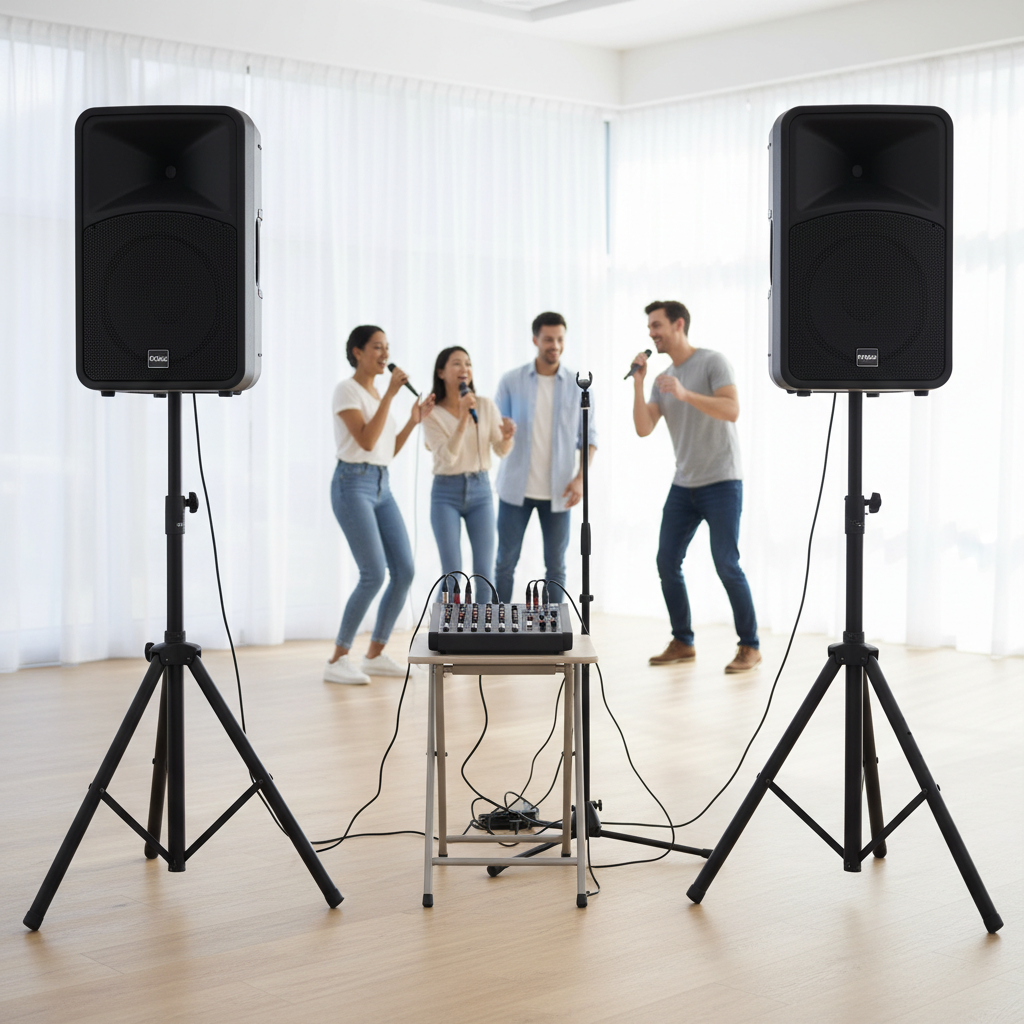
For over a decade, the world of karaoke systems has continuously evolved, introducing innovations that transform how we enjoy singing. Among the many players that have graced this exciting landscape, the Acesonic KOD-4000 emerged as a notable contender, aiming to provide a comprehensive and versatile karaoke experience. As an admin with extensive experience in audio and karaoke systems, I’ve seen countless products, and the KOD-4000 certainly had its moments. This review delves into the features, capabilities, and overall impact of the Acesonic KOD-4000, offering insights into what made it stand out, even as it becomes a relic of a past era.
Understanding the Acesonic KOD-4000: Key Features and Capabilities
The Acesonic KOD-4000 was designed as a multimedia karaoke player, bringing together several functionalities into a single, cohesive unit. Its core strength lay in its ability to manage and play a vast library of songs and media, making it a powerful hub for both home entertainment and commercial karaoke setups.
Hard Drive Capacity and Seamless Expansion
|
Our Picks for the Best Karaoke system in 2026
As an Amazon Associate I earn from qualifying purchases.
|
||
| Num | Product | Action |
|---|---|---|
| 1 | NBVOICE Professional Portable All-in-One Integrated 2-Way PA System Fixed Setup, Suitcase Design w/ 8-Channel Mixer, 2 Speaker Stands, Bluetooth, Mic for Performances, Presentations |

|
| 2 | Ikarao Portable Karaoke Machine for Adults, Built-in Lyrics Display and Screen, 2 Self-Charging Wireless Microphones, Karaoke App, 140W Speaker, Connects to TV for Home Party Birthday Outdoor Camping |
|
| 3 | Karaoke Machine, Portable Bluetooth Speaker with 2 Wireless Microphones for Adults & Kids with Lights, Karaoke Microphone with PA System Supports USB/TF/REC/FM/AUX for Home Party Home System Packages |
|
| 4 | Ikarao Smart Karaoke Machine for Adults - with Lyrics Display, 32GB Karaoke Tablet, 2 Wireless Mics, Professional Karaoke System, 300W Peak Power, 4 DJ Lights, Karaoke Speaker for Any Occasion |
|
| 5 | VOSOCO Karaoke Machine with 2 Wireless Microphones, Portable Bluetooth Speaker for Adults Kids, PA Systems Support TWS Echo Adjust TF USB AUX for Home Party Outdoor Travel |
|
| 6 | Portable Karaoke Machine, with Wireless Microphones, Bluetooth Party Speaker with LED Lights, Loud Subwoofer, USB/AUX, Outdoor Karaoke Speaker for Adults & Kids, Home & Party |
|
| 7 | Karaoke Machine for Adults, Built-in 10.1" HD Lyrics Screen, Supports WiFi Bluetooth HDMI USB and TF, Portable Karaoke Player with 2 Wireless Microphones for Home Party Family Gathering |
|
| 8 | JBL Wireless Two Microphone System with Dual-Channel Receiver, Black |
|
| 9 | Karaoke Soundbar with Subwoofer for TV: Sound Bar with 2 Wireless Microphones - Home Theater Surround Sound System - Bluetooth Speaker with Remote Supports HDMI ARC/Optical/AUX/USB for TV/PC |
|
| 10 | Karaoke Machine, Portable Bluetooth 5.3 Speaker with 2 Wireless Microphones for Adults, PA System with Pitch Correction & Echo Adjustment, Supports TWS/TF Card/USB/AUX/Live for Home Party (2MICS) |
|
One of the standout features of the KOD-4000 was its impressive storage capabilities. The player could house a single hard drive with capacities typically up to 8TB, with some sources even mentioning 10TB configurations. This substantial internal storage meant users could build extensive song libraries directly on the device. For those requiring even greater capacity, the system offered unlimited song expansion through an attached network drive, a crucial feature for commercial environments or multi-room setups where a centralized library was essential.
Multi-Format Media Support for Diverse Content
Versatility was key for the KOD-4000. It boasted broad multi-format support, accommodating a wide array of karaoke and video files. Users could play popular formats such as MP3G, MP3, MKV, MPEG1/2/4, WMV, RMVB, and AVI, ensuring compatibility with most existing media libraries. This flexibility allowed users to enjoy a variety of content without worrying about conversion issues.
Integrated Media Center Functionality
Beyond just karaoke, the Acesonic KOD-4000 doubled as a robust media center. It allowed users to access and enjoy family photos, videos, or simply listen to their favorite music tracks directly from the built-in hard drive. This integrated approach enhanced its utility, making it more than just a karaoke machine but a complete entertainment system.
Convenient Smartphone and Tablet Control
Embracing modern technology, the KOD-4000 offered advanced control options. Users could transform their iPad or Android tablets into fully functional remote controls by downloading a free app. This enabled effortless song browsing, searching, and selection, enhancing the user experience and providing greater convenience than traditional remote controls.
Intelligent Song Management
The player featured a smart search function, allowing users to quickly find songs by number, name, artist, or category. Furthermore, it supported Unicode for up to 20 different languages, making it incredibly versatile for diverse user bases and international song libraries. Adding new content was also streamlined, with the ability to capture MP3G and video tracks directly from USB storage devices and integrate them into the internal hard drive.
Comprehensive Connectivity Options
The KOD-4000 was equipped with a range of input and output ports to integrate seamlessly into various audio-visual setups. Key connections included a single HDMI 1.3 output, CVBS output, YPbPr output, optical output, coaxial output, RS232 port, IR extension port, one USB 2.0 port, an Ethernet network interface (RJ-45), and two microphone inputs. These options ensured compatibility with most existing audio and video equipment.
Is it a 4K Player? Clarifying Video Output
The keyword for this review specifically mentions “4K Player,” which warrants clarification. While the Acesonic KOD-4000 was an advanced machine for its time, its specifications indicate an HDMI 1.3 output. HDMI 1.3 is primarily designed to support Full HD (1080p) resolutions, not 4K (Ultra HD). Therefore, despite its robust features, the Acesonic KOD-4000 should not be considered a native 4K player. Users expecting Ultra HD visuals from this specific model would likely find its capabilities limited to 1080p. This distinction is important for those prioritizing the absolute latest in video resolution for their karaoke experience.
Performance in Action: What Users Could Expect
The design philosophy behind the Acesonic KOD-4000 focused on delivering a user-friendly and highly adaptable karaoke experience.
Ease of Use and Jukebox Performance
The KOD-4000 aimed for “true jukebox performance,” allowing instant media retrieval and playback. Its smart search features, coupled with tablet control, made navigating large song libraries simple and intuitive, reducing friction and enhancing the overall fun for singers and hosts alike.
Expandability for Any Environment
The ability to expand song capacity via network drives and integrate additional machines into a client-server network made the KOD-4000 highly scalable. This was particularly beneficial for commercial settings like karaoke bars or entertainment venues needing to manage a shared library across multiple rooms.
Versatility in Use
Whether for a lively family gathering at home or a professional setup, the KOD-4000’s features, including its media center function and multi-language support, made it a versatile choice. It could handle a variety of entertainment needs beyond just singing, providing a centralized system for diverse media consumption.
Common Considerations and Troubleshooting
While the Acesonic KOD-4000 was a reliable machine, like any electronic device, users might encounter general issues typical of multimedia players. Based on common karaoke system troubleshooting, these might include:
- Connectivity Issues: Problems with cables not being firmly connected or defective, or incorrect input source selections on a connected amplifier or TV, can lead to no audio or video output.
- Audio/Video Problems: Distorted sound can stem from improper volume settings, issues with microphone connections, or even certain disc recording methods. Screen problems like black and white, wavy images, or static could indicate an incorrect video mode setting.
- Remote Control Functionality: An unresponsive remote might be due to exhausted batteries, incorrect battery placement, or being too far from the player’s IR sensor.
- Disc Playback Issues: If the player struggled with discs (though the KOD-4000 focuses on hard drive playback, disc compatibility was sometimes a feature in similar models), it could be due to dirty or warped discs, improper seating, or regional encoding issues.
For many problems, resetting the unit to factory defaults was often a recommended first step, along with ensuring proper ventilation to prevent overheating. It’s worth noting that no specific widespread or unique issues for the KOD-4000 were commonly reported in public information; general troubleshooting for karaoke players usually applied.
“A well-designed karaoke system should offer intuitive song selection and reliable media playback, empowering users to focus purely on the joy of singing.” – Reviewerc.com Admin, Audio & Karaoke Systems Specialist
Conclusion
The Acesonic KOD-4000 (4K Player, though natively 1080p) carved out a significant niche in the karaoke market with its robust feature set, extensive storage capabilities, and user-friendly controls. Its ability to serve as both a dedicated karaoke system and a versatile media center, coupled with modern conveniences like smartphone control and network expansion, made it a strong contender for various applications.
While the KOD-4000 is now discontinued, its legacy highlights the evolution of karaoke technology, emphasizing the demand for comprehensive, expandable, and easy-to-manage systems. For those who owned or experienced it, the KOD-4000 offered a powerful and flexible platform for countless hours of musical enjoyment. Understanding its capabilities provides valuable context for how karaoke systems have advanced and continue to adapt to user needs. Have you ever experienced the thrill of a seamlessly managed karaoke session, thanks to a feature-rich player?
Frequently Asked Questions
What is the maximum storage capacity of the Acesonic KOD-4000?
The Acesonic KOD-4000 could support a single internal hard drive with capacities typically up to 8TB, and some sources mentioned configurations up to 10TB. It also offered unlimited expansion via an attached network drive for larger song libraries.
Can I control the Acesonic KOD-4000 with my smartphone?
Yes, the Acesonic KOD-4000 was designed with modern control in mind, allowing users to use their iPad or Android tablets as fully functional remote controls through a dedicated app for song search and selection.
Does the Acesonic KOD-4000 support 4K video output?
Despite the keyword’s inclusion of “4K Player,” the Acesonic KOD-4000 featured an HDMI 1.3 output, which primarily supports Full HD (1080p) resolution. It was not a native 4K (Ultra HD) player.
What media formats does the Acesonic KOD-4000 play?
The KOD-4000 supported a wide range of media formats, including popular karaoke and video types such as MP3G, MP3, MKV, MPEG1/2/4, WMV, RMVB, and AVI, providing broad compatibility for various content.
Is the Acesonic KOD-4000 still available for purchase?
No, according to available information, the Acesonic KOD-4000 has been permanently discontinued by the manufacturer. While you might find pre-owned units, new retail availability is unlikely.