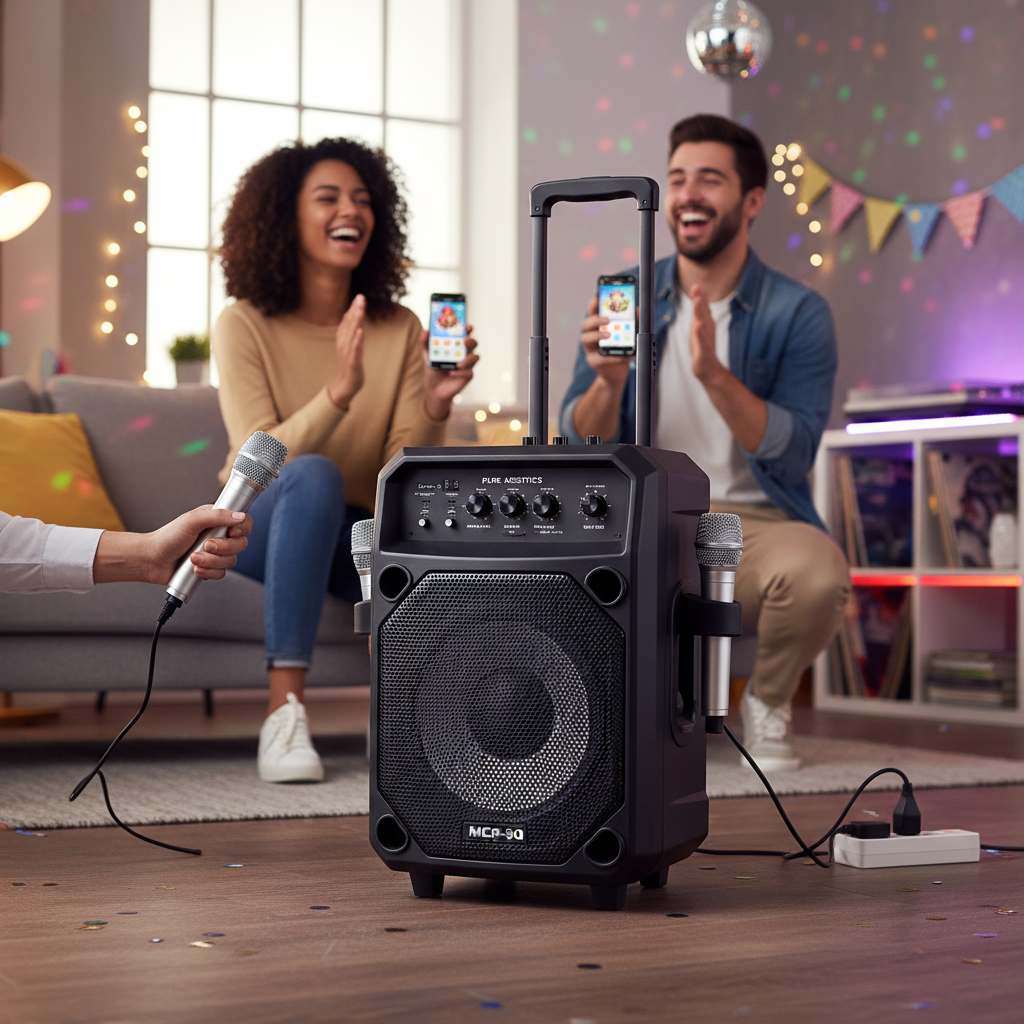
Stepping up to the microphone in your living room should feel as exhilarating as performing on a grand stage. If you’ve ever experienced muffled vocals, distracting feedback, or an imbalanced mix during a home karaoke session, you know the right equipment makes all the difference. Choosing the best karaoke mixer for your home theater is paramount to transforming a simple sing-along into an unforgettable vocal performance. With over a decade immersed in audio and karaoke systems, I understand the challenges and joys of finding the perfect sound. This guide shares practical insights and real-world experience to help you make an informed decision, ensuring your home theater is ready for its spotlight moment in 2026.
Understanding the Heart of Your Home Karaoke: What is a Karaoke Mixer?
At its core, a karaoke mixer is an audio processing device designed to blend multiple sound sources into a cohesive, balanced output. Think of it as the central command unit for your singing experience, meticulously combining your microphone’s input with the instrumental backing track. While many home theater systems can play music, they often lack the dedicated inputs and specialized vocal effects necessary to make voices shine. A good karaoke mixer processes the microphone signals, applies effects like echo and reverb to enhance vocals, and then seamlessly integrates them with your music, delivering a professional-grade sound through your home theater speakers. Without a dedicated mixer, balancing vocal clarity with background music becomes a constant struggle, often leading to either drowned-out singing or jarring feedback.
Factors to Consider When Choosing a Karaoke Mixer for Your Home Theater
Selecting the ideal karaoke mixer involves more than just picking a popular model. It requires a thoughtful assessment of your specific needs, existing setup, and desired performance level.
Budget and Value
|
Our Picks for the Best Karaoke system in 2026
As an Amazon Associate I earn from qualifying purchases.
|
||
| Num | Product | Action |
|---|---|---|
| 1 | Karaoke Machine, Portable Bluetooth Speaker with 2 Wireless Microphones for Adults & Kids with Lights, Karaoke Microphone with PA System Supports USB/TF/REC/FM/AUX for Home Party Home System Packages |

|
| 2 | VOSOCO Karaoke Machine with 2 Wireless Microphones, Portable Bluetooth Speaker for Adults Kids, PA Systems Support TWS Echo Adjust TF USB AUX for Home Party Outdoor Travel |
|
| 3 | NBVOICE Professional Portable All-in-One Integrated 2-Way PA System Fixed Setup, Suitcase Design w/ 8-Channel Mixer, 2 Speaker Stands, Bluetooth, Mic for Performances, Presentations |
|
| 4 | Karaoke Soundbar with Subwoofer for TV: Sound Bar with 2 Wireless Microphones - Home Theater Surround Sound System - Bluetooth Speaker with Remote Supports HDMI ARC/Optical/AUX/USB for TV/PC |
|
| 5 | Karaoke Machine for Adults, Built-in 10.1" HD Lyrics Screen, Supports WiFi Bluetooth HDMI USB and TF, Portable Karaoke Player with 2 Wireless Microphones for Home Party Family Gathering |
|
| 6 | Karaoke Machine, Portable Bluetooth 5.3 Speaker with 2 Wireless Microphones for Adults, PA System with Pitch Correction & Echo Adjustment, Supports TWS/TF Card/USB/AUX/Live for Home Party (2MICS) |
|
| 7 | Portable Karaoke Machine, with Wireless Microphones, Bluetooth Party Speaker with LED Lights, Loud Subwoofer, USB/AUX, Outdoor Karaoke Speaker for Adults & Kids, Home & Party |
|
| 8 | Ikarao Smart Karaoke Machine for Adults - with Lyrics Display, 32GB Karaoke Tablet, 2 Wireless Mics, Professional Karaoke System, 300W Peak Power, 4 DJ Lights, Karaoke Speaker for Any Occasion |
|
| 9 | JBL Wireless Two Microphone System with Dual-Channel Receiver, Black |
|
| 10 | Ikarao Portable Karaoke Machine for Adults, Built-in Lyrics Display and Screen, 2 Self-Charging Wireless Microphones, Karaoke App, 140W Speaker, Connects to TV for Home Party Birthday Outdoor Camping |
|
Karaoke mixers range from affordable, entry-level units to professional-grade equipment. Determine your budget early, but prioritize value over the lowest price. An inexpensive mixer might save money upfront but could compromise sound quality or lack essential features. Look for a balance of features, performance, and price that aligns with how often and intensely you plan to use your karaoke system.
Connectivity with Home Theater
Modern home theaters demand versatile connectivity. Ensure your chosen mixer offers inputs compatible with your smart TV, streaming devices, and audio sources. Key connections to look for include:
- HDMI ARC (Audio Return Channel): For seamless audio extraction from your TV and integration.
- Optical (Toslink): Another digital audio input for high-quality sound from TVs or soundbars.
- Bluetooth: For wirelessly streaming music from smartphones or tablets.
- RCA & 3.5mm Aux: Standard analog connections for a wide range of devices.
- USB: For playing music from flash drives, connecting to a computer, or even recording.
Number of Microphone Inputs and Channels
Consider how many singers will perform simultaneously. Most home users will need at least two microphone inputs for duets. If you frequently host larger parties, a mixer with four or more inputs offers greater flexibility. Each input channel on a mixer typically features its own volume control, and often EQ and effects sends, allowing individual optimization for each microphone.
Built-in Effects (Echo, Reverb, EQ)
Vocal effects are the magic ingredient for karaoke, making even amateur singers sound polished.
- Echo and Reverb: Essential for adding depth and space to vocals, mimicking a live performance environment.
- Equalization (EQ): Allows you to fine-tune bass, mid-range, and treble frequencies for each microphone and the music, crucial for clarity and feedback prevention. Many mixers also offer pitch correction and key shifting to help singers match the song.
Ease of Use and Controls
For a home theater setup, a user-friendly interface is vital. You want to focus on singing, not fumbling with complex controls. Look for mixers with clearly labeled knobs and faders, intuitive layouts, and quick access to essential adjustments like mic volume, music volume, and effects. Digital mixers might offer app control, which can be convenient for remote adjustments.
Power Requirements (Powered vs. Unpowered)
- Unpowered (Passive) Mixers: These require an external amplifier or powered speakers to drive the sound. They are typically more compact and offer greater flexibility in speaker choice.
- Powered (Active) Mixers/Mixer-Amplifiers: These units have a built-in amplifier, simplifying your setup by reducing the number of components. They are an excellent all-in-one solution if you don’t already have a dedicated amplifier or powered speakers.
Durability and Build Quality
While home use is less demanding than professional gigs, a durable mixer ensures longevity. Look for sturdy construction, quality components, and reliable connectors that can withstand frequent plugging and unplugging.
Types of Karaoke Mixers for Home Use
The market offers various types of mixers, each suited to different preferences and technical requirements.
Analog Mixers
Analog mixers are the classic choice, prized for their straightforward, tactile controls. Each knob and fader directly manipulates an audio signal, offering an intuitive “what you see is what you get” experience. They are often more budget-friendly and simpler to operate for basic mixing needs, providing warm, natural sound. However, they may lack the advanced digital effects and connectivity options of their digital counterparts.
Digital Mixers
Digital mixers represent the cutting edge, offering advanced features like extensive built-in effects, programmable scene presets, and often remote control via apps. They convert analog audio signals to digital, process them, and then convert them back to analog for output. This allows for complex signal routing, precise EQ, and sophisticated vocal enhancements. While potentially more expensive and with a steeper learning curve, digital mixers provide unparalleled control and flexibility for an optimized sound experience.
Mixer-Amplifiers (Powered Mixers)
For those seeking an all-in-one solution, a mixer-amplifier combines the functions of an audio mixer and a power amplifier into a single unit. This simplifies your home karaoke setup by reducing the number of components and cables. They are particularly suitable if you don’t already own a separate amplifier or powered speakers, offering convenience and a streamlined system.
Integrated Wireless Mic/Mixer Systems
These systems package a basic mixer with one or more wireless microphones. They prioritize ease of setup and reduced cable clutter, making them excellent for casual home users. Many such systems include Bluetooth connectivity for music streaming and essential vocal effects like echo, providing a convenient and compact karaoke solution. The Sound Town SWM16-MAX is an example of a system that integrates HDMI ARC and wireless microphones for a smart TV-centric home karaoke experience.
Key Components and Features of a Modern Karaoke Mixer
Understanding the individual elements of a karaoke mixer helps you appreciate its capabilities and select one that matches your home theater ambitions.
- Microphone Inputs: These are where your microphones connect, typically using XLR or 1/4-inch jack cables. Some mixers also feature built-in wireless microphone receivers, offering greater freedom of movement.
- Audio Inputs: This is where you connect your music sources. Common inputs include RCA (for DVD players or older audio equipment), 3.5mm auxiliary (for smartphones or MP3 players), and increasingly, digital inputs like Optical or HDMI ARC for direct connection to modern TVs and sound systems. Bluetooth and USB inputs also offer versatile music playback options.
- Outputs: These send the mixed audio to your home theater receiver, soundbar, or powered speakers. Common output types include RCA, 1/4-inch jacks, or XLR for higher-quality, balanced connections.
- EQ Controls (Equalization): Usually found on each channel, these knobs (often for bass, mid, and treble) allow you to sculpt the tone of both vocals and music, ensuring clarity and preventing muddy sound or harsh frequencies.
- Effects Processors: Dedicated sections for adding vocal effects like echo, reverb, and delay. These are crucial for enhancing the singing experience, giving voices a professional, studio-like quality.
- Gain Control & Phantom Power:
- Gain Control: Adjusts the input sensitivity for each microphone, ensuring a strong, clear signal before it’s mixed.
- Phantom Power: A 48V electrical current supplied through XLR cables, necessary for powering condenser microphones, which are known for their high-fidelity sound capture.
- Headphone Monitoring: A dedicated headphone jack allows you to monitor the mix privately, useful for troubleshooting or fine-tuning levels without disturbing others.
Top Karaoke Mixer Recommendations for Home Theaters 2026
Based on current trends and consistent user feedback, several mixers stand out for their suitability in home theater karaoke setups.
Yamaha MG10XU
The Yamaha MG10XU consistently receives high praise as a versatile mixer for both home and semi-professional use. It offers exceptional audio quality, a robust build, four high-quality microphone preamps, and built-in SPX digital effects like reverb and delay. Its USB interface allows for recording and playback, making it a powerful choice for serious karaoke enthusiasts who value pristine sound and comprehensive control.
Sound Town SWM16-MAX Wireless Microphone Karaoke Mixer System
For seamless integration with modern home theaters, the Sound Town SWM16-MAX is a strong contender. This system often includes two wireless microphones and features HDMI ARC and Optical inputs, simplifying audio connection from smart TVs. It allows you to extract TV audio, blend it with vocals, and output it back, making it incredibly user-friendly for a contemporary home setup. Its ease of setup and wireless capabilities make it a popular choice.
Alesis MultiMix 4 USB FX
If you’re looking for a compact, budget-friendly option without sacrificing essential features, the Alesis MultiMix 4 USB FX is an excellent choice. It provides two microphone preamps, built-in digital effects, and a USB audio interface for computer connectivity. Its small footprint is ideal for smaller home theater spaces, offering a perfect blend of affordability and functionality for budding karaoke stars.
Rockville Singmix 5V2
The Rockville Singmix 5V2 caters to home users who want ample microphone inputs and potentially a powerful output. It boasts multiple microphone inputs (often five) and significant power output, making it suitable for larger home gatherings or small parties where driving multiple speakers might be desired. It’s designed for clean vocals and minimal feedback, providing a robust option for dynamic home karaoke.
Rybozen Wireless Microphone Karaoke Mixer System
For ultimate simplicity and wireless convenience, the Rybozen Wireless Microphone Karaoke Mixer System is a popular pick. This affordable unit typically comes with two wireless handheld microphones and offers Bluetooth connectivity, allowing effortless streaming of music. Its adjustable echo and voice control make it easy for anyone to jump in and start singing, reducing clutter and setup time for casual fun.
Detailed Comparison Table: Popular Karaoke Mixers for Home Theaters
| Feature | Yamaha MG10XU | Sound Town SWM16-MAX | Alesis MultiMix 4 USB FX | Rockville Singmix 5V2 | Rybozen Wireless Mic System |
|---|---|---|---|---|---|
| Price Range | Mid-High | Mid | Low-Mid | Mid-High | Low |
| Mic Inputs | 4 (XLR/TRS) | 2 (Wireless, often included) | 2 (XLR/TRS) | 5 (XLR/1/4″) | 2 (Wireless, included) |
| Key Features | High-quality D-PRE preamps, SPX effects, USB audio interface, one-knob compression | HDMI ARC/Optical, Bluetooth, wireless mics, easy TV integration, echo | Compact, built-in FX, USB audio interface, 2-band EQ per channel | High power (600W RMS/2000W Peak), multiple zones, anti-feedback | Bluetooth, adjustable echo, voice control, compact, very user-friendly |
| Connectivity | XLR, 1/4″, USB | HDMI ARC, Optical, RCA, Bluetooth | XLR, 1/4″, RCA, USB | XLR, 1/4″, RCA, Bluetooth, USB | RCA, 3.5mm, Bluetooth |
| Pros | Excellent sound, versatile, durable, professional features, recording capability | Ideal for modern home theaters, includes wireless mics, simple setup | Portable, affordable, good effects for its class, easy for beginners | High power, many mic inputs, good for parties, robust build | Very easy to use, wireless mics included, ultra-affordable, minimal setup |
| Cons | Higher price point, no HDMI ARC | Fewer advanced mixing features, reliant on TV inputs, might lack extensive EQ | Limited inputs/channels, less powerful preamps, basic connectivity | Larger footprint, potentially more than needed for simple home use | Basic features, limited connectivity, sound quality might not satisfy audiophiles |
Setting Up Your Karaoke Mixer with a Home Theater System
Integrating a karaoke mixer into your existing home theater doesn’t have to be complicated. Here’s a general guide:
-
Connect Music Sources:
- From your TV: If your mixer has HDMI ARC or Optical inputs, connect your TV directly to the mixer using the appropriate cable. This lets all audio playing on your TV (from streaming apps, cable box, etc.) feed into the mixer.
- From a dedicated device: For a streaming box, DVD player, or computer, connect its audio output (HDMI audio out, RCA, or 3.5mm) to the mixer’s music input channels.
- Wireless: Use Bluetooth to pair your smartphone or tablet with the mixer for easy music streaming.
-
Connect Microphones: Plug your wired microphones into the mixer’s XLR or 1/4-inch inputs. If you have a wireless mic system, ensure its receiver is connected to a dedicated mic input on the mixer.
-
Connect to Your Home Theater Amplifier/Speakers:
- Connect the mixer’s main audio outputs (usually RCA, 1/4-inch, or XLR) to an available input on your home theater receiver or soundbar. If you have powered speakers, connect the mixer directly to them.
- Ensure the volume on your home theater receiver or speakers is set to a safe, low level before powering on your mixer.
-
Basic Audio Level Adjustments:
- Start with all microphone and music volumes on the mixer at their lowest.
- Slowly raise the main volume on your home theater system to a comfortable listening level.
- Gradually increase the music volume on the mixer until it’s audible.
- Then, introduce your microphone volume. Sing into the mic and adjust its gain and volume until your voice is clear and balanced with the music.
- Experiment with the EQ and effects (echo, reverb) to find your desired vocal sound.
- Position microphones away from speakers to prevent feedback, and use headphone monitoring if available to fine-tune individual microphone levels.
Troubleshooting Common Karaoke Mixer Issues
Even with the best equipment, occasional hiccups can occur. Here’s how to tackle some frequent problems:
- No Sound or Low Volume: Check all cable connections securely. Ensure the mixer is powered on and all volume knobs (mic, music, main out, and individual channel gains) are adequately raised on both the mixer and your home theater system. Confirm the correct input is selected on your home theater receiver.
- Feedback (High-Pitched Squeal): This is usually caused by the microphone picking up its own amplified sound from the speakers.
- Move microphones away from speakers.
- Lower microphone volume or gain.
- Adjust the EQ to cut frequencies causing the feedback (typically mid-high range).
- Avoid pointing microphones directly at speakers.
- Distorted Audio: Check if any input levels (gain) are too high, causing clipping (indicated by a “peak” or “clip” light on the mixer). Reduce the gain until the light no longer flashes consistently. Also, ensure speaker volume isn’t pushed beyond its limits.
- Connectivity Problems (e.g., Bluetooth won’t pair): Make sure Bluetooth is enabled on both devices and they are within range. Forget the device in your phone’s Bluetooth settings and try pairing again. For wired connections, try a different cable to rule out a faulty one.
Conclusion
A high-quality karaoke mixer is the secret ingredient to a truly immersive and enjoyable home theater karaoke experience. By understanding the different types, essential features, and key considerations like connectivity and ease of use, you can confidently select a model that perfectly aligns with your singing aspirations for 2026 and beyond. Whether you opt for a feature-rich digital mixer, a straightforward analog unit, or a convenient all-in-one system, the right mixer will ensure your vocals are crisp, your music is balanced, and every performance is met with enthusiastic applause.
Are you ready to transform your home theater into the ultimate stage?
Frequently Asked Questions
What is the most important feature for a home karaoke mixer?
For home use, the most important features are often ease of use, good connectivity with your TV (like HDMI ARC or Optical), and effective built-in vocal effects such as echo and reverb, which significantly enhance the singing experience for everyone.
Do I need a powered or unpowered karaoke mixer for my home theater?
If your home theater system already has a receiver or powered speakers, an unpowered mixer is usually sufficient. However, if you lack a separate amplifier or prefer a simpler setup, a powered mixer (mixer-amplifier) combines both functions into one convenient unit.
Can I use a regular audio mixer for karaoke in my home?
Yes, a regular audio mixer can be used for karaoke, but karaoke-specific mixers often include dedicated vocal effects like echo and reverb, as well as simplified controls optimized for singing. A standard mixer might require external effects units or more complex adjustments to achieve the desired karaoke sound.
How many microphone inputs do I need for home karaoke?
For most home karaoke setups, two microphone inputs are ideal to allow for duets. If you frequently host larger parties or have a family that loves to sing together, consider a mixer with four or more inputs for maximum flexibility.
How can I prevent microphone feedback in my home karaoke setup?
To prevent feedback, always point microphones away from speakers, avoid placing them too close to the speakers, and reduce the microphone’s gain or volume if a high-pitched squeal occurs. Adjusting the mixer’s EQ to cut problematic frequencies (often in the mid-high range) can also be very effective.