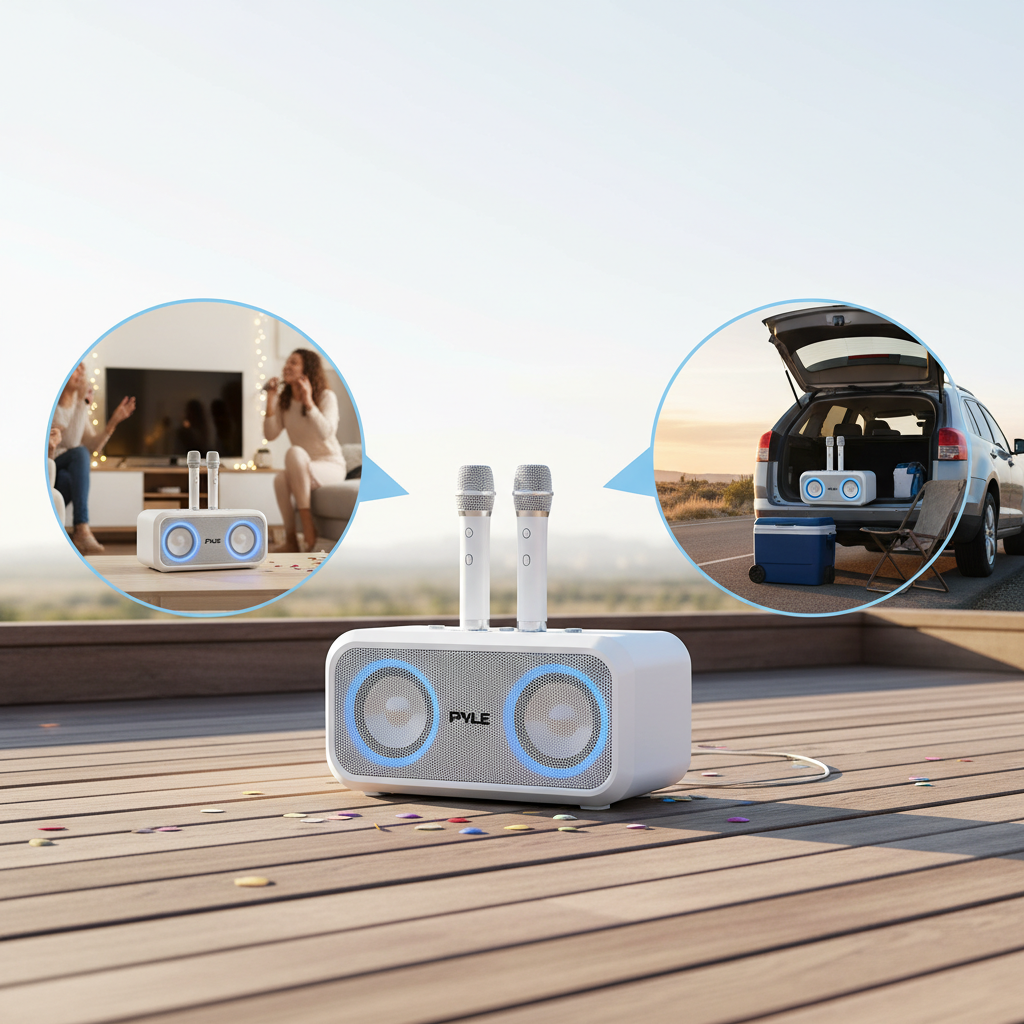
In the vast and often confusing world of home audio, finding a compact amplifier that delivers without breaking the bank can feel like searching for a hidden gem. Many of us dream of a simple, effective solution to power our bookshelf speakers or add a microphone for a spontaneous karaoke session. The Pyle PTA4 mini stereo power amplifier frequently emerges as a popular contender in this budget-friendly category, promising robust sound in a small package. But does it truly live up to the hype, or are there hidden caveats behind its appealing price tag? This review aims to cut through the marketing jargon and provide a real-world assessment of the Pyle PTA4, helping you decide if this compact amp is the right heartbeat for your home audio setup.
First Impressions and Design
The Pyle PTA4 presents itself as a no-frills, functional device. Its compact footprint, typically measuring around 8.27″ W x 2.72″ H x 5.39″ D, makes it ideal for desktop setups, small entertainment centers, or anywhere space is at a premium. The build quality is standard for its price range, featuring a painted steel sheet metal housing and utilitarian plastic knobs. While it won’t win any design awards, its white-on-black front panel lettering ensures readability, a practical choice for everyday use.
The front panel offers a straightforward array of controls: rotary knobs for mic volume, balance, bass, treble, and master volume, allowing for precise audio adjustments. A distinctive blue LED output level display adds a touch of visual flair, illuminating when the unit is active. Connectivity on the front includes a 3.5mm AUX input jack for easy connection of portable devices like smartphones or MP3 players, and a 1/4-inch headphone jack that mutes the main speaker outputs when in use.
Around the back, you’ll find the main inputs: two pairs of RCA jacks (often labeled AUX1/AUX2/CD/RCA) for connecting traditional audio sources like CD players, tuners, or tape decks. Push-type speaker terminals facilitate easy connection of speaker wires, supporting a total speaker impedance of at least 4 Ohms per channel in stereo mode. A notable feature is the 1/4-inch microphone input, alongside an RCA record output for connecting to a recording device. The inclusion of a voltage selector (110V/220V) on the rear panel adds flexibility for use in different regions.
Advertised vs. Real-World Power: The Pyle PTA4 Wattage Debate
One of the most common points of discussion surrounding budget amplifiers like the Pyle PTA4 is the discrepancy between advertised peak power and actual continuous RMS power. The Pyle PTA4 is often marketed with impressive claims such as “2 x 120 watts of power,” suggesting a robust output. However, for any discerning audiophile, the real metric of an amplifier’s capability lies in its RMS (Root Mean Square) power output.
In reality, the Pyle PTA4 utilizes a TDA7377 power amplifier chip, which is typically rated for approximately 20 watts per channel at 4 ohms with 1% Total Harmonic Distortion (THD), or around 32 watts per channel at 4 ohms with 10% THD. Some independent measurements even suggest a more conservative output of about 10-11 watts RMS per channel into 8 ohms. This means that while the “120W max” figure might refer to a theoretical peak or dynamic power under specific, non-continuous conditions, the amplifier’s practical, sustained power output is significantly lower.
What does this mean for you? It’s crucial to match the amplifier to your speakers and room size. The Pyle PTA4 is best suited for driving efficient bookshelf speakers in small to medium-sized rooms, or for powering desktop speakers where high volume levels aren’t the primary concern. Expecting it to power large, power-hungry floor-standing speakers or fill a large hall with booming sound would be unrealistic and lead to disappointment and distortion. Understanding this difference is key to setting appropriate expectations and achieving the best performance from this compact unit.
Connectivity and Versatility: More Than Just Music
Despite its compact size and modest power, the Pyle PTA4 excels in offering a surprising array of connectivity options, making it a highly versatile hub for various audio needs. This isn’t just an amp for playing music; it’s designed to handle a mix of traditional and modern sources, even accommodating vocal applications.
At its core, the PTA4 provides multiple stereo RCA inputs, allowing you to connect up to three separate audio devices simultaneously. These are perfect for your classic components like a CD player, a vintage tape deck, or even a TV audio output. For immediate convenience, a 3.5mm AUX input is located on the front panel, providing a quick and easy way to connect your smartphone, tablet, or laptop without fumbling with rear connections.
One of the stand-out features for a mini amplifier in this price range is the dedicated 1/4-inch microphone input. This opens up possibilities beyond simple music playback, making the PTA4 a viable option for casual karaoke or public address (PA) applications. The unit further enhances this functionality with a unique switchable “Pager” and “Mixing” mode:
- Pager Mode: In this setting, the microphone signal takes precedence, automatically attenuating the background music by -12dB when you speak. This “auto talkover” feature is ideal for making announcements, whether in a home office, a small store, or during events.
- Mixing Mode: For those who love to sing along, the mixing mode allows both the microphone and the selected audio input to be active simultaneously. This creates a true karaoke experience, blending your vocals with the music for a fun and engaging session.
Additionally, the Pyle PTA4 includes a 1/4-inch headphone jack on the front for private listening, which conveniently mutes the main speaker outputs when headphones are plugged in. An RCA record output is also present on the rear, allowing you to easily capture the mixed audio feed for recording. The ability to switch between 110V/60Hz and 220V/50Hz power supply also provides international compatibility. This thoughtful inclusion of diverse inputs and modes truly elevates the PTA4’s utility, proving it to be a flexible workhorse for many small-scale audio tasks.
Audio Performance: Clarity, Tone, and Known Quirks
When evaluating the Pyle PTA4’s audio performance, it’s essential to temper expectations with its budget-friendly price point. For casual listening and its intended applications, the amplifier generally delivers clear and crisp audio. Many users find the sound quality perfectly adequate for background music, desktop audio, or small room entertainment.
The unit includes bass and treble tone controls, along with a balance knob, allowing for some personalization of the sound profile. However, these controls offer a somewhat limited range. Independent measurements suggest that the treble provides about +/- 1 dB of adjustment around 2 kHz, while the bass offers approximately +/- 0.5 dB, with a turnover frequency around 400 Hz. This means you can make minor adjustments to suit your preferences, but don’t expect dramatic equalization capabilities.
Despite its functionality, the Pyle PTA4 isn’t without its quirks, particularly concerning sound purity. A recurring complaint among users is the presence of background noise, often manifesting as a discernible hum (typically 120 Hz) or hiss, especially noticeable at lower volumes or during quiet passages. This noise floor can detract from the listening experience, particularly for more critical listeners or in quiet environments.
Further insights into its design reveal potential contributors to these issues. The amplifier utilizes a TDA7377 power amp chip, designed for automotive applications, which is reportedly supplied with a voltage higher than its specified maximum operating voltage (22 VDC versus the datasheet’s 18V max). While well-designed automotive chips can be tolerant, this is considered a non-conservative design choice that might impact long-term reliability and contribute to the unit’s noise characteristics. Additionally, the tone controls are implemented with single-gang pots, which can also be a factor in their limited effectiveness and potential for noise.
“The Pyle PTA4 is a great example of a ‘value proposition’ amp. It offers impressive features for its price, but critical listeners should be aware of the inherent compromises in power output and noise floor that come with such an affordable design.” – Audio Enthusiast, Home Audio Reviewer
Ultimately, the Pyle PTA4 provides a functional audio experience for its cost. While it delivers clear sound for most casual users, those seeking pristine, noiseless audio or extensive tonal shaping might find its limitations apparent.
Ideal Use Cases for the Pyle PTA4
The Pyle PTA4’s blend of compact size, versatile inputs, and budget-friendly pricing makes it an excellent fit for several specific audio applications where its strengths truly shine.
- Desktop Audio Setup: If you’re looking to power a pair of passive bookshelf speakers for your computer, the PTA4 is a superb choice. Its small footprint easily fits on a desk, and its power output is more than sufficient for near-field listening, providing a significant upgrade over typical PC speakers.
- Small Room Stereo System: For a bedroom, den, or small office, the PTA4 can serve as the core of a simple stereo system. Connect a CD player, a streaming device via AUX, and a pair of efficient speakers for enjoyable background music or focused listening.
- Basic Karaoke Setup: With its dedicated microphone input and switchable mixing mode, the PTA4 is surprisingly well-equipped for casual karaoke nights. Just add a microphone and your favorite music source, and you’re ready to sing along.
- Paging System: The “Pager” mode, which prioritizes microphone audio over music, makes the PTA4 suitable for basic announcement systems in small retail spaces, community centers, or even home offices.
- Budget-Conscious Setups: For anyone needing an amplifier on a tight budget, whether for a secondary system, a garage setup, or simply to get started with passive speakers, the PTA4 offers a lot of functionality for its cost.
It’s important to remember that the PTA4 excels when its limitations are understood. It’s not designed to be a high-fidelity audiophile component or to power large, demanding speaker systems. Instead, it thrives in scenarios where functionality, versatility, and affordability are the top priorities.
Addressing Common Problems and Troubleshooting
Like any electronic device, the Pyle PTA4 can occasionally present issues. Fortunately, many common problems have straightforward solutions.
- No Power: If your amplifier fails to turn on, first check that the power cord is securely connected to both the unit and the electrical outlet. Next, inspect the replaceable fuse located on the rear panel. A blown fuse often indicates a power surge or short circuit. Always disconnect the power cord before checking or replacing the fuse. Ensure the voltage selector switch (110V/220V) is set correctly for your region.
- Distorted Sound: Distorted audio can stem from several sources. The input signal might be too high; try reducing the volume from your audio source (e.g., smartphone, CD player). An impedance mismatch between the amplifier and your speakers can also cause distortion; ensure your speakers have an impedance of 4-8 Ohms. Finally, inspect your speaker wires for any damage or incorrect connections.
- Microphone Not Working: If your microphone isn’t producing sound, verify that the “MIC VOLUME” knob is turned up. Check the Pager/Mixing mode switch on the rear panel to ensure it’s set to either Pager or Mixing mode. If it’s still not working, test with another microphone to rule out a faulty mic.
- Background Noise (Hum/Hiss): This is a frequently reported characteristic of the Pyle PTA4. While sometimes inherent to its design and budget components, you can try to minimize it by ensuring proper grounding of all connected equipment and isolating power cables from audio cables. Using high-quality, shielded RCA cables can also sometimes help reduce hum. However, it’s worth noting that a complete elimination of low-level background noise might not be achievable with this unit.
- Speaker Output Issues: If only one channel is working or there’s no sound, check your speaker wire connections for proper polarity (+ to +, – to -) and ensure they are securely inserted into the push-type terminals. Also, verify that the balance control isn’t skewed entirely to one side. If headphones are plugged into the front jack, they will mute the main speaker outputs.
By systematically checking these potential causes, you can often resolve common issues and get your Pyle PTA4 performing as expected.
Pyle PTA4 Alternatives & Considerations
While the Pyle PTA4 offers a compelling package for its price, it’s wise to consider alternatives if its specific features or limitations don’t perfectly align with your needs. Pyle itself produces numerous variants of mini amplifiers, often incorporating features like Bluetooth connectivity, USB/SD card playback, or slightly different power outputs. For example, some Pyle models, distinct from the base PTA4, do offer integrated Bluetooth for wireless streaming.
If higher true RMS power is a priority for larger speakers or rooms, you might explore other compact amplifiers from brands like Fosi Audio, Dayton Audio, or Topping, which often provide more transparent power ratings and potentially cleaner audio at higher volumes, though typically at a higher price point. If Bluetooth connectivity is essential, ensure you select a model explicitly labeled with “BT” (e.g., Pyle PTA4BT or similar) as the standard PTA4 does not inherently include it. For those sensitive to background noise, investing in an amplifier with a better signal-to-noise ratio and more robust internal components would be a worthwhile upgrade. Additionally, if extensive tone control is important, look for amplifiers with more sophisticated EQ options or consider adding an external equalizer to your setup. Comparing technical specifications like THD, frequency response, and signal-to-noise ratio can help you make an informed decision when looking at alternatives.
Conclusion
The Pyle PTA4 home audio amplifier carves out a significant niche in the market for its remarkable affordability and versatile functionality. It’s a compact workhorse that successfully brings together multiple input options, including traditional RCA, a convenient front AUX jack, and a microphone input with practical pager and mixing modes, making it suitable for everything from desktop audio to casual karaoke sessions. While its “2 x 120W” power claims should be interpreted with a clear understanding of real-world RMS output (closer to 10-32W per channel), and a discernible background hum/hiss is a known characteristic, the PTA4 provides commendable clarity and performance for its price.
Ultimately, the Pyle PTA4 shines as an exceptional value proposition for budget-conscious consumers seeking a versatile, compact amplifier for small to medium-sized spaces. It’s a practical solution for powering efficient speakers, adding a microphone for entertainment, or simply getting started with a basic home audio setup. If you’re looking for an amplifier that offers robust features without a hefty price tag, and you understand its inherent limitations, the Pyle PTA4 could be the perfect match for your needs. Is the Pyle PTA4 the right fit for your home audio journey, or will you consider its more specialized siblings?
Frequently Asked Questions
What is the real wattage of the Pyle PTA4?
|
Our Picks for the Best Karaoke system in 2026
As an Amazon Associate I earn from qualifying purchases.
|
||
| Num | Product | Action |
|---|---|---|
| 1 | Karaoke Machine for Adults, Built-in 10.1" HD Lyrics Screen, Supports WiFi Bluetooth HDMI USB and TF, Portable Karaoke Player with 2 Wireless Microphones for Home Party Family Gathering |

|
| 2 | JBL Wireless Two Microphone System with Dual-Channel Receiver, Black |
|
| 3 | VOSOCO Karaoke Machine with 2 Wireless Microphones, Portable Bluetooth Speaker for Adults Kids, PA Systems Support TWS Echo Adjust TF USB AUX for Home Party Outdoor Travel |
|
| 4 | Karaoke Soundbar with Subwoofer for TV: Sound Bar with 2 Wireless Microphones - Home Theater Surround Sound System - Bluetooth Speaker with Remote Supports HDMI ARC/Optical/AUX/USB for TV/PC |
|
| 5 | NBVOICE Professional Portable All-in-One Integrated 2-Way PA System Fixed Setup, Suitcase Design w/ 8-Channel Mixer, 2 Speaker Stands, Bluetooth, Mic for Performances, Presentations |
|
| 6 | Ikarao Smart Karaoke Machine for Adults - with Lyrics Display, 32GB Karaoke Tablet, 2 Wireless Mics, Professional Karaoke System, 300W Peak Power, 4 DJ Lights, Karaoke Speaker for Any Occasion |
|
| 7 | Karaoke Machine, Portable Bluetooth 5.3 Speaker with 2 Wireless Microphones for Adults, PA System with Pitch Correction & Echo Adjustment, Supports TWS/TF Card/USB/AUX/Live for Home Party (2MICS) |
|
| 8 | Karaoke Machine, Portable Bluetooth Speaker with 2 Wireless Microphones for Adults & Kids with Lights, Karaoke Microphone with PA System Supports USB/TF/REC/FM/AUX for Home Party Home System Packages |
|
| 9 | Ikarao Portable Karaoke Machine for Adults, Built-in Lyrics Display and Screen, 2 Self-Charging Wireless Microphones, Karaoke App, 140W Speaker, Connects to TV for Home Party Birthday Outdoor Camping |
|
| 10 | Portable Karaoke Machine, with Wireless Microphones, Bluetooth Party Speaker with LED Lights, Loud Subwoofer, USB/AUX, Outdoor Karaoke Speaker for Adults & Kids, Home & Party |
|
The Pyle PTA4 is often advertised as “2 x 120 watts maximum power.” However, its actual continuous RMS power output is significantly lower, typically ranging from 10 to 32 watts per channel into 4 ohms, depending on the measured Total Harmonic Distortion (THD). It’s best suited for efficient speakers in small to medium-sized rooms.
Can I use the Pyle PTA4 for karaoke?
Yes, the Pyle PTA4 is suitable for casual karaoke. It features a 1/4-inch microphone input and a “Mixing” mode that allows both music and microphone audio to play simultaneously, blending your vocals with the background track.
Does the Pyle PTA4 have Bluetooth?
The standard Pyle PTA4 model typically does not include built-in Bluetooth connectivity. However, Pyle offers various amplifier models, some of which are variants of the PTA4 series (e.g., PTA4BT) that do incorporate Bluetooth for wireless audio streaming. Always check the specific model number for Bluetooth capability if it’s a desired feature.
What kind of speakers should I use with the Pyle PTA4?
The Pyle PTA4 is best paired with efficient passive bookshelf speakers or smaller full-range speakers that have an impedance of 4-8 Ohms. Its realistic power output means it will perform best with speakers that don’t require a lot of power to achieve good volume levels, making it ideal for desktop or small room audio.
How do I fix hum or hiss from my Pyle PTA4?
Background hum or hiss can be a common issue with the Pyle PTA4. To minimize it, ensure all components are properly grounded, use high-quality shielded RCA cables, and keep power cables separated from audio cables. While these steps can help, some level of background noise might be inherent to the unit’s design due to its budget-friendly components.