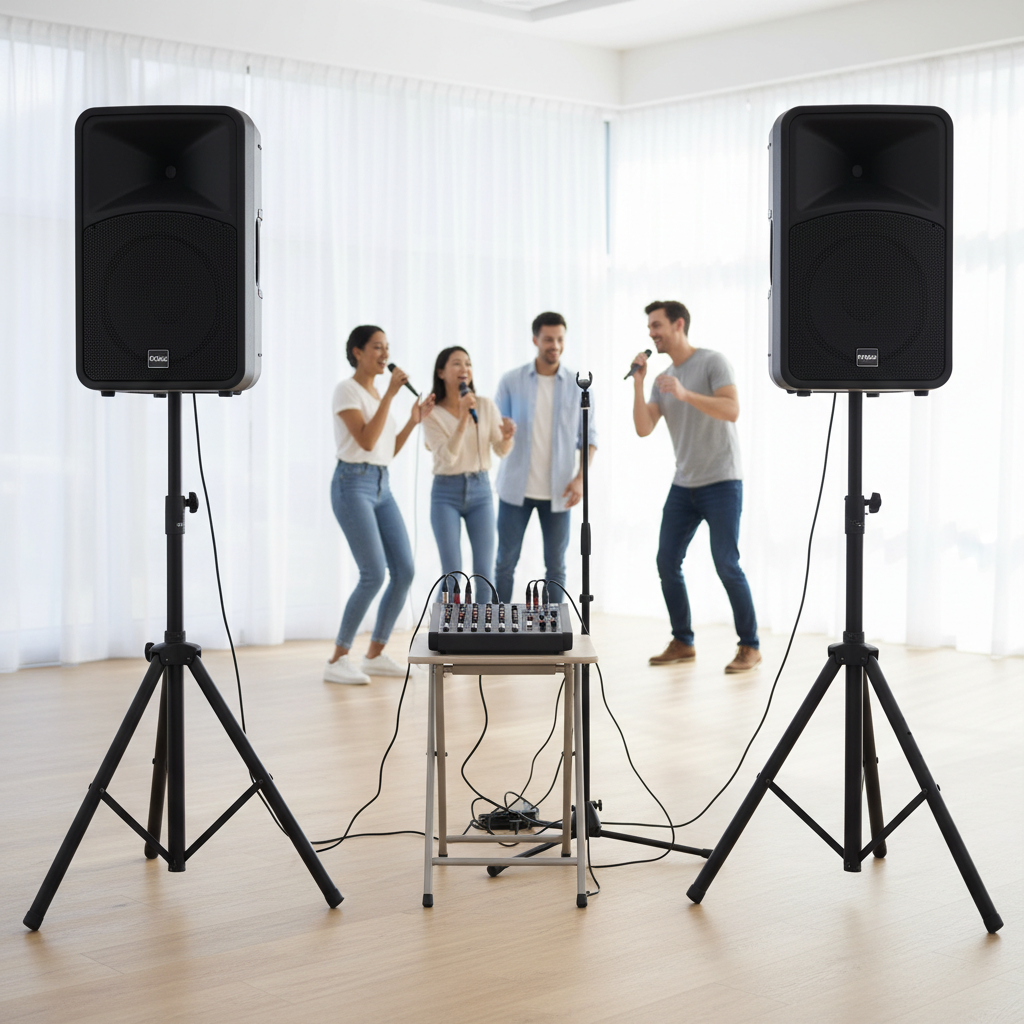
Stepping onto the virtual stage of your living room can be exhilarating, but for many, the thought of hitting a wrong note can be daunting. What if there was a way to sing with confidence, knowing your voice would always sound its best? The good news is that modern karaoke machines often come equipped with “auto-tune effects” – a range of vocal enhancements designed to make every performance sound polished and professional. This comprehensive guide, drawing from over a decade of hands-on experience in audio systems, will help you navigate the options and choose the perfect karaoke machine to elevate your singing experience.
Understanding Auto-Tune and Vocal Effects in Karaoke Systems
When we talk about “auto-tune effects” in karaoke, it’s important to differentiate between professional studio-grade Auto-Tune® software and the more common vocal enhancements found in consumer karaoke machines. True Auto-Tune, a patented technology, offers precise, per-note pitch correction aligned to a musical scale, a feature rarely integrated into standard home units. However, many mid-tier karaoke machines provide “real-time pitch correction” or “vocal tune” features that gently nudge your voice toward the correct notes, acting as a helpful “pitch assist” rather than a robotic overhaul. These systems also commonly include other effects like echo, reverb, and voice morphing (such as male, female, monster, or chipmunk voices) that add character and ambience to your performance, though they don’t directly correct pitch accuracy.
The goal of these effects is to enhance vocal performance and boost confidence, ensuring a more enjoyable singing experience for everyone, regardless of natural talent. Pitch correction can smooth out minor inaccuracies, making your delivery sound more refined, while effects like reverb can add depth and richness, giving your voice a more “studio” feel.
Key Elements to Consider When Choosing a Karaoke System
Selecting the ideal karaoke machine with auto-tune effects involves evaluating several crucial components that contribute to overall performance and user satisfaction.
Types of Karaoke Systems and Their Vocal Effect Capabilities
Karaoke machines come in various forms, each suited for different environments and needs.
- Home Karaoke Systems: These are typically all-in-one units or compact setups designed for living rooms. They often feature built-in screens, basic pitch correction, and a range of vocal effects like echo and reverb. Brands like Singing Machine and Tonor offer robust home systems.
- Portable Karaoke Systems: Ideal for parties, outdoor events, or moving between rooms, these units emphasize portability, often with wheels, handles, and rechargeable batteries. While some may have simpler vocal effects, models like the Ikarao Shell S1 or certain JBL PartyBox speakers integrate pitch assist alongside other sound enhancements.
- Professional/Advanced Home Setups: For serious enthusiasts, a dedicated vocal processor (like a TC Helicon or Zoom V3) can be integrated into a larger sound system. These standalone devices offer more sophisticated, customizable pitch correction and a wider array of studio-quality effects, providing a level of control that built-in machine features often lack.
|
Our Picks for the Best Karaoke system in 2026
As an Amazon Associate I earn from qualifying purchases.
|
||
| Num | Product | Action |
|---|---|---|
| 1 | Portable Karaoke Machine, with Wireless Microphones, Bluetooth Party Speaker with LED Lights, Loud Subwoofer, USB/AUX, Outdoor Karaoke Speaker for Adults & Kids, Home & Party |

|
| 2 | NBVOICE Professional Portable All-in-One Integrated 2-Way PA System Fixed Setup, Suitcase Design w/ 8-Channel Mixer, 2 Speaker Stands, Bluetooth, Mic for Performances, Presentations |
|
| 3 | Karaoke Machine for Adults, Built-in 10.1" HD Lyrics Screen, Supports WiFi Bluetooth HDMI USB and TF, Portable Karaoke Player with 2 Wireless Microphones for Home Party Family Gathering |
|
| 4 | VOSOCO Karaoke Machine with 2 Wireless Microphones, Portable Bluetooth Speaker for Adults Kids, PA Systems Support TWS Echo Adjust TF USB AUX for Home Party Outdoor Travel |
|
| 5 | Karaoke Machine, Portable Bluetooth Speaker with 2 Wireless Microphones for Adults & Kids with Lights, Karaoke Microphone with PA System Supports USB/TF/REC/FM/AUX for Home Party Home System Packages |
|
| 6 | Ikarao Smart Karaoke Machine for Adults - with Lyrics Display, 32GB Karaoke Tablet, 2 Wireless Mics, Professional Karaoke System, 300W Peak Power, 4 DJ Lights, Karaoke Speaker for Any Occasion |
|
| 7 | Karaoke Soundbar with Subwoofer for TV: Sound Bar with 2 Wireless Microphones - Home Theater Surround Sound System - Bluetooth Speaker with Remote Supports HDMI ARC/Optical/AUX/USB for TV/PC |
|
| 8 | Karaoke Machine, Portable Bluetooth 5.3 Speaker with 2 Wireless Microphones for Adults, PA System with Pitch Correction & Echo Adjustment, Supports TWS/TF Card/USB/AUX/Live for Home Party (2MICS) |
|
| 9 | JBL Wireless Two Microphone System with Dual-Channel Receiver, Black |
|
| 10 | Ikarao Portable Karaoke Machine for Adults, Built-in Lyrics Display and Screen, 2 Self-Charging Wireless Microphones, Karaoke App, 140W Speaker, Connects to TV for Home Party Birthday Outdoor Camping |
|
Essential Components of a Karaoke System with Vocal Effects
A complete karaoke setup relies on several interconnected parts working in harmony.
- Karaoke Speakers: The quality and power of your speakers significantly impact the overall sound. Look for clear audio reproduction and sufficient wattage for your space. Some speakers, like those in the JBL PartyBox series, even offer dedicated mic inputs with adjustable bass, treble, and echo.
- Karaoke Amplifier (or Integrated Mixer): This component boosts the audio signal and allows you to mix your voice with the music. In many all-in-one machines, the amplifier and mixer are integrated, offering controls for microphone volume, music volume, and effects levels.
- Karaoke Microphones: Wireless microphones offer freedom of movement, while wired mics typically provide a more consistent signal. Some advanced microphones or systems come with built-in EQ and vocal effects. Look for good clarity and feedback suppression.
- Karaoke Player (or Source): This is where your music comes from. Modern machines support Bluetooth streaming from smartphones, USB drives, CD+G discs, or even Wi-Fi connectivity to access online song libraries and streaming apps.
- Screen for Lyrics: Many machines feature integrated screens, while others connect to your TV or tablet via HDMI or Bluetooth for lyric display. A clear, easily readable screen is essential for a seamless singing experience.
Comparing Popular Karaoke Systems with Auto-Tune Effects
While true Auto-Tune is rare, several brands excel at providing excellent pitch correction and vocal enhancement features. Here’s a look at some notable options and a detailed comparison.
Leading Brands for Vocal Effects and Pitch Correction
- Singtrix: Often hailed as one of the best for vocal processing, Singtrix offers extensive real-time pitch correction and hundreds of vocal effects, creating harmonies and transforming voices in studio-quality ways. It’s designed to make anyone sound like a star.
- Singing Machine: A long-standing name in karaoke, Singing Machine offers various models that include basic pitch assist, echo, and voice-changing effects, making them popular for home and party use.
- JBL PartyBox Series: While primarily party speakers, certain JBL PartyBox models (like the PartyBox 710 or Club 120) include dual mic inputs with customizable mic levels, bass, treble, and echo via their companion app, enhancing vocal performance.
- Ikarao & Tonor: These brands are frequently mentioned for their all-in-one portable systems that often incorporate wireless mics, good sound output, and various sound effects to boost the singing experience.
Detailed Comparison of Key Karaoke System Features
This table highlights essential features to consider, focusing on their vocal enhancement capabilities.
| Feature | Singtrix Party Bundle Stadium Edition | Singing Machine Ultimate Platinum | JBL PartyBox 710 | Tonor K20 Wireless Karaoke Machine |
|---|---|---|---|---|
| Vocal Effects | Extensive real-time pitch correction, harmonies, hundreds of effects, voice morphing | Basic pitch assist, echo, voice changing effects | Mic volume, bass, treble, echo (via app) | Echo, reverb, other vocal effects |
| Microphones | Two wired mics (can use wireless) | Wireless mics included | Two mic inputs (mics sold separately) | Two wireless mics included |
| Connectivity | Aux-in, instrument input | Bluetooth, CD+G, USB, Aux | Bluetooth, USB, Aux-in, Guitar/Mic | Bluetooth, USB, microSD, Aux |
| Output Power | High-fidelity stereo speakers (integrated) | Powerful integrated speakers | 800W RMS | 250W peak power |
| Display | Connects to TV/device | Connects to TV | No built-in screen | Connects to TV/device (or tablet holder) |
| Portability | Medium | Low (home-focused) | High (with wheels) | High (with pull rod) |
| Special Features | Studio controller, game modes | LED disco lights | RGB light shows, DJ effects | Disco ball, various ports |
“The difference between basic pitch correction and advanced vocal processing is like the difference between a helpful co-pilot and a full-fledged flight simulator. For casual fun, the co-pilot is great, but for truly transformative vocals, you need more sophisticated tools.” – Alex Rivera, Audio Engineer & Karaoke Enthusiast
How to Select the Perfect Karaoke System for Your Needs
Choosing the right machine involves a thoughtful assessment of your budget, where you’ll use it, and your primary singing goals.
Define Your Budget
Karaoke machines with vocal effects vary widely in price. Entry-level models with basic pitch assist and echo can be quite affordable, while advanced systems like Singtrix or those requiring external vocal processors will be a more significant investment. Determine what you’re willing to spend to narrow down your options.
Consider Your Usage Environment
- Home Use: For casual family fun, an all-in-one system with a built-in screen and basic vocal effects is often sufficient.
- Parties/Events: Portability, powerful speakers, and multiple microphone inputs become important. Look for systems that can handle a crowd and offer robust sound.
- Serious Singing/Performance: If vocal refinement is your top priority, consider a system that allows integration with a dedicated vocal effects processor for advanced pitch correction and studio-quality sound.
Identify Your Primary Purpose
Are you looking for subtle pitch correction to improve your confidence, or do you want dramatic voice-altering effects for entertainment? Some machines lean more towards fun voice morphing, while others focus on realistic vocal enhancement. Singtrix, for example, is renowned for both.
Research Technical Specifications
Pay attention to speaker wattage (RMS for continuous power), microphone type (wired vs. wireless), battery life for portable units, and connectivity options (Bluetooth, USB, HDMI, Wi-Fi). Higher wattage means louder, clearer sound, and diverse connectivity ensures compatibility with your music sources.
Read User Reviews and Expert Opinions
Real-world feedback from other users can provide valuable insights into a machine’s performance, ease of use, and the effectiveness of its vocal effects. Look for consistent comments on sound quality and pitch correction capabilities.
Overcoming Common Karaoke System Challenges
Even with the best equipment, you might encounter minor hurdles. Knowing how to address them ensures your singing sessions remain seamless.
Addressing Audio Issues
- Feedback: This high-pitched squeal often occurs when the microphone is too close to the speakers or the mic volume is too high. Start with lower mic volume, position speakers in front of the microphone, and avoid pointing the mic directly at the speakers.
- Distorted Sound: If your vocals sound distorted, the microphone gain or volume might be set too high, causing clipping. Reduce the mic input level until the sound is clear. Ensure your speakers aren’t overdriven.
- Low Vocal Volume: Check microphone batteries (if wireless), ensure the mic is plugged in correctly, and increase microphone volume on the machine or mixer.
Resolving Connectivity Problems
- Bluetooth Pairing: Ensure both devices (karaoke machine and your phone/tablet) are in pairing mode, within range, and not connected to other devices. Forget previous pairings if issues persist.
- No Sound from External Screen/TV: Verify HDMI or audio cables are securely connected to the correct input/output ports on both the karaoke machine and the display. Check the input source on your TV.
- Music Not Playing: Confirm your music source (USB, CD+G, streaming app) is properly connected and functioning. Check the music volume on both the source device and the karaoke machine.
Conclusion
Choosing the best karaoke machine with auto-tune effects can transform your singing experience from hesitant to harmonious. By understanding the nuances of vocal enhancement, considering key features like pitch correction and connectivity, and selecting a system that aligns with your needs and budget, you’re well on your way to countless hours of confident, star-worthy performances. Remember that while true studio Auto-Tune is rare, the advanced pitch correction and diverse vocal effects available in many modern karaoke machines are more than capable of helping you sound your best.
So, are you ready to grab the microphone and let your voice shine brighter than ever before?
Frequently Asked Questions
What’s the difference between “auto-tune” and “pitch correction” in karaoke?
“Auto-Tune” is a brand name for a specific professional pitch correction software. In karaoke machines, “pitch correction” is a more general term for features that subtly adjust your singing to hit notes more accurately, often less aggressively than the famous Auto-Tune effect.
Can a karaoke machine make a bad singer sound good?
While pitch correction can significantly improve a singer’s performance by correcting minor off-key notes, it can’t fundamentally replace vocal training or natural talent. It acts as a helpful assist, making performances more polished and enjoyable.
Do I need a special microphone for auto-tune effects?
Most karaoke machines with built-in vocal effects will work with their included microphones. However, for more advanced pitch correction or specific vocal processors, a higher-quality microphone can improve the clarity and accuracy of the vocal input, leading to better effect application.
How do I connect my karaoke machine to my TV for lyrics?
Most modern karaoke machines offer HDMI output to connect to your TV. Some may use RCA cables or even wirelessly cast lyrics from a connected smartphone or tablet app, allowing you to display song lyrics on a larger screen.
Are portable karaoke machines with auto-tune effects effective for outdoor use?
Yes, many portable karaoke machines with vocal effects are designed for outdoor use, often featuring robust speakers, rechargeable batteries, and Bluetooth connectivity. Their effectiveness for auto-tune depends on the specific model’s vocal processing capabilities, which can vary.
Can I add an external auto-tune device to my existing karaoke system?
Absolutely. For more professional-grade auto-tune and vocal effects, you can connect external vocal processors (like those from TC Helicon or Zoom) between your microphone and your karaoke machine’s audio input. This provides greater control and a wider range of studio-quality effects.