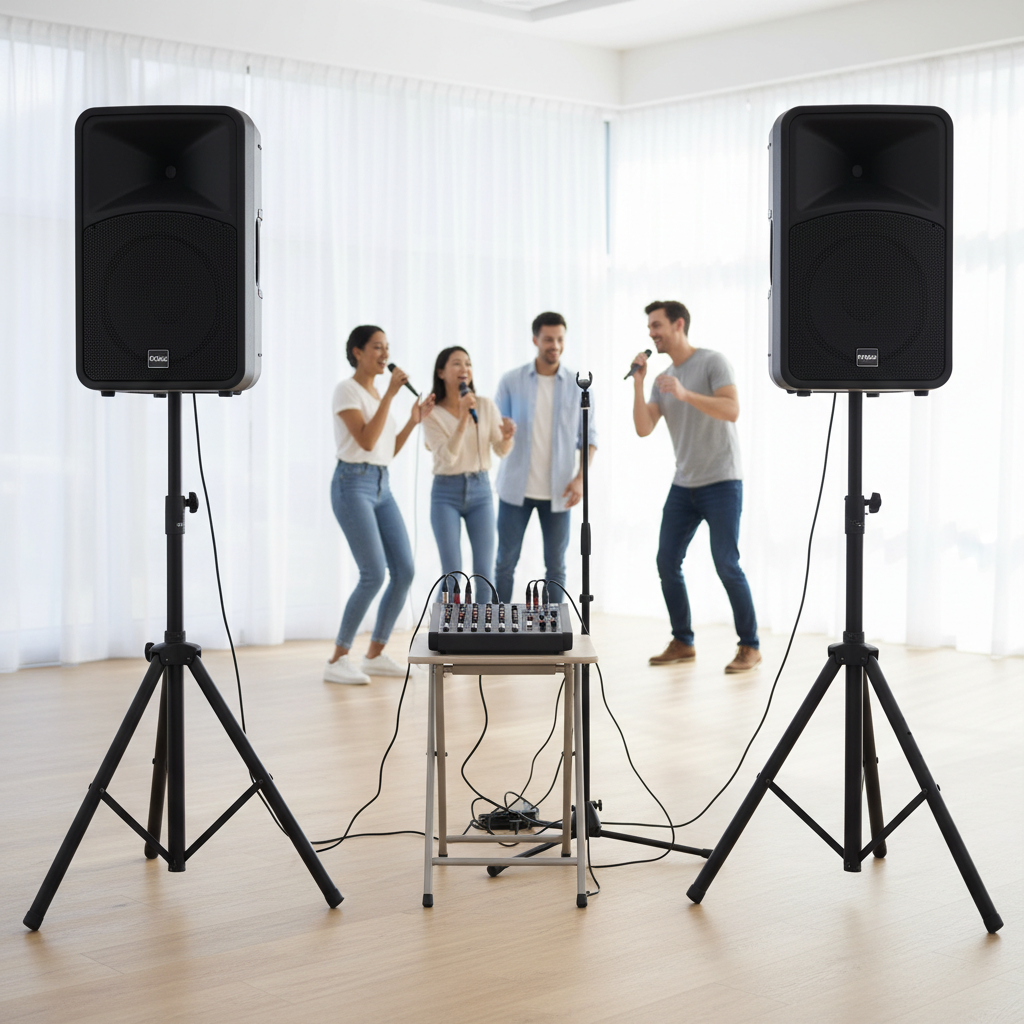
Stepping up to the microphone, ready to belt out your favorite tune, you expect crisp vocals and rich background music. But have you ever stopped to consider how your karaoke system’s audio is connected? The choice between HDMI ARC and Optical audio cables might seem technical, but it profoundly impacts your singing experience. As someone with over a decade of experience in audio and karaoke systems, I understand the nuances that make or break a performance. This guide will walk you through the strengths and weaknesses of each connection, helping you make the most informed decision for your karaoke setup, ensuring every note you hit sounds its absolute best.
Understanding Your Karaoke Audio Connections
Before diving into comparisons, let’s clarify what HDMI ARC and Optical audio are and how they function in your entertainment ecosystem. Knowing their fundamental principles is key to appreciating their roles in delivering karaoke sound.
What is HDMI ARC?
|
Our Picks for the Best Karaoke system in 2026
As an Amazon Associate I earn from qualifying purchases.
|
||
| Num | Product | Action |
|---|---|---|
| 1 | Portable Karaoke Machine, with Wireless Microphones, Bluetooth Party Speaker with LED Lights, Loud Subwoofer, USB/AUX, Outdoor Karaoke Speaker for Adults & Kids, Home & Party |

|
| 2 | Karaoke Machine, Portable Bluetooth 5.3 Speaker with 2 Wireless Microphones for Adults, PA System with Pitch Correction & Echo Adjustment, Supports TWS/TF Card/USB/AUX/Live for Home Party (2MICS) |
|
| 3 | VOSOCO Karaoke Machine with 2 Wireless Microphones, Portable Bluetooth Speaker for Adults Kids, PA Systems Support TWS Echo Adjust TF USB AUX for Home Party Outdoor Travel |
|
| 4 | Karaoke Machine for Adults, Built-in 10.1" HD Lyrics Screen, Supports WiFi Bluetooth HDMI USB and TF, Portable Karaoke Player with 2 Wireless Microphones for Home Party Family Gathering |
|
| 5 | JBL Wireless Two Microphone System with Dual-Channel Receiver, Black |
|
| 6 | Karaoke Machine, Portable Bluetooth Speaker with 2 Wireless Microphones for Adults & Kids with Lights, Karaoke Microphone with PA System Supports USB/TF/REC/FM/AUX for Home Party Home System Packages |
|
| 7 | Ikarao Portable Karaoke Machine for Adults, Built-in Lyrics Display and Screen, 2 Self-Charging Wireless Microphones, Karaoke App, 140W Speaker, Connects to TV for Home Party Birthday Outdoor Camping |
|
| 8 | NBVOICE Professional Portable All-in-One Integrated 2-Way PA System Fixed Setup, Suitcase Design w/ 8-Channel Mixer, 2 Speaker Stands, Bluetooth, Mic for Performances, Presentations |
|
| 9 | Karaoke Soundbar with Subwoofer for TV: Sound Bar with 2 Wireless Microphones - Home Theater Surround Sound System - Bluetooth Speaker with Remote Supports HDMI ARC/Optical/AUX/USB for TV/PC |
|
| 10 | Ikarao Smart Karaoke Machine for Adults - with Lyrics Display, 32GB Karaoke Tablet, 2 Wireless Mics, Professional Karaoke System, 300W Peak Power, 4 DJ Lights, Karaoke Speaker for Any Occasion |
|
HDMI ARC, or Audio Return Channel, is a feature found on many modern televisions and audio devices. It allows a single HDMI cable to handle both video signals to the TV and audio signals back from the TV to an audio receiver or soundbar. Introduced with HDMI 1.4, ARC simplifies cabling by eliminating the need for a separate audio cable when your TV is the central hub for various media sources. The “enhanced” version, eARC (Enhanced Audio Return Channel), builds upon ARC, offering significantly higher bandwidth for uncompressed, high-resolution audio formats.
What is Optical (Toslink) Audio?
Optical audio, also known as Toslink, is a digital audio interface that uses fiber optic cables to transmit audio signals via pulses of light. Developed by Toshiba, it’s a long-standing standard primarily used for audio-only transmission. Optical connections are lauded for their immunity to electromagnetic interference (EMI), which can sometimes affect electrical cables. Historically, it has been a reliable method for connecting TVs to sound systems, delivering digital stereo or compressed surround sound.
Core Differences: HDMI ARC vs. Optical for Karaoke
When it comes to powering your karaoke sessions, the distinct capabilities of HDMI ARC and Optical audio connections play a critical role. From the richness of the music to the precision of your vocals, these differences can significantly enhance or detract from your singing experience.
Audio Quality and Supported Formats
The most significant distinction between HDMI ARC and Optical lies in their bandwidth and the range of audio formats they support. This directly translates to the fidelity of your karaoke sound.
- HDMI ARC/eARC: HDMI ARC, particularly its enhanced counterpart eARC, boasts superior bandwidth. This allows it to transmit uncompressed, high-definition audio formats like Dolby TrueHD, DTS HD Master Audio, and advanced object-based formats such as Dolby Atmos and DTS:X. With eARC, you can experience full 7.1 uncompressed surround sound, creating a truly immersive soundstage for your karaoke performances. This higher bandwidth ensures that every nuance of the music and every subtlety of your vocal performance is delivered with maximum clarity and depth.
- Optical: Optical audio cables have a more limited bandwidth. They can support compressed multichannel audio formats like Dolby Digital and DTS (up to 5.1 channels) and uncompressed two-channel PCM stereo audio. However, they cannot handle the higher-resolution, uncompressed audio formats that HDMI ARC and especially eARC can. For karaoke, this means that while optical provides good quality sound, it may not reproduce the full richness and detail of complex music tracks or deliver the pristine clarity of uncompressed vocals that HDMI ARC offers.
The impact on vocal clarity and music richness in karaoke is substantial. For audiophiles or those seeking a professional-grade karaoke experience, the ability of HDMI ARC to transmit uncompressed audio means a more faithful reproduction of both instrumental tracks and live vocals. Imagine your voice being carried with pristine clarity, free from any compression artifacts, over a background track that sounds as vibrant and dynamic as the original recording.
Latency and Audio-Video Synchronization
For karaoke, few things are more frustrating than a delay between your voice and what you hear, or between the on-screen lyrics and the audio. This is where latency and synchronization become paramount.
- HDMI ARC’s Advantage: HDMI ARC generally offers lower latency compared to optical connections. Since it can transmit both audio and video signals (or retrieve audio from the TV while displaying video from another source), it is designed for better audio-video synchronization. Many HDMI ARC setups include built-in synchronization tools to mitigate lip-sync issues, which is crucial for a smooth karaoke experience. When you sing, you want your voice to be processed and heard instantly, in perfect harmony with the music and lyrics.
- Potential Lip-Sync Issues with Optical: Optical audio connections can sometimes introduce slight delays. Because optical is a one-way audio-only connection, the audio processing might not always be perfectly synchronized with the video processing, especially if your TV handles video faster than it sends out audio. This can lead to noticeable lip-sync problems, where your voice or the on-screen lyrics appear out of step with the sound, making it challenging and less enjoyable to sing along. For live vocal performances like karaoke, minimizing any delay is vital for a natural and engaging experience.
Connectivity, Convenience, and Control
Beyond pure audio performance, the practical aspects of connecting your system can significantly influence your user experience.
- HDMI ARC: A Single-Cable Solution: One of HDMI ARC’s most compelling advantages is its ability to simplify your setup. By allowing audio to return from the TV to an audio system via the same HDMI cable used for video input, it reduces cable clutter. Moreover, HDMI ARC supports Consumer Electronics Control (CEC), which enables devices to communicate and control each other. This means you can often control the volume of your soundbar or AV receiver using your TV remote, streamlining your karaoke setup and making it more user-friendly.
- Optical: Dedicated Audio: Optical cables are purely for audio transmission. While reliable, they require a separate cable dedicated solely to sound, in addition to any video cables you might use. This can result in more cables behind your entertainment center. Optical connections also lack CEC functionality, meaning you’ll likely need separate remotes to control your TV and audio system’s volume, which can be less convenient for an interactive activity like karaoke.
Compatibility and Equipment Considerations
The choice between HDMI ARC and Optical often comes down to the equipment you already own or plan to purchase.
- Modern Equipment Favors HDMI ARC/eARC: Most new televisions, soundbars, and AV receivers manufactured in recent years feature HDMI ARC, with many high-end devices now sporting eARC ports. If you have a relatively modern setup, HDMI ARC will likely be readily available and offer the best features.
- Optical for Older Devices or Specific Setups: Optical remains a dependable alternative, especially if you have older TVs or audio devices that lack an HDMI ARC port. It’s also a good choice if you prefer to keep audio and video signals entirely separate to avoid potential digital handshaking issues, though these are increasingly rare with modern HDMI implementations. If your primary karaoke system components (e.g., a dedicated karaoke player, mixer, amplifier) only offer an optical output, then it’s a perfectly viable connection for its capabilities.
Cable Length and Signal Integrity
The physical properties of the cables themselves can also play a role in certain setups.
- Optical’s Resistance to EMI: Because optical cables transmit signals using light pulses through fiber optics, they are inherently immune to electromagnetic interference. This makes them ideal for environments where electrical noise might be an issue, or for longer cable runs (some optical cables can maintain signal integrity over distances up to 50 feet or more) without signal degradation.
- HDMI’s Signal Limitations (and Solutions): Standard passive HDMI cables can experience signal degradation over longer distances, typically beyond 15 feet, which might affect high-bandwidth audio and video. However, this is largely mitigated by active HDMI cables, which include internal processors to boost signals, or by using fiber optic HDMI cables for very long runs, which combine the benefits of HDMI’s bandwidth with optical’s distance capabilities. For most home karaoke setups with shorter cable runs, standard HDMI is perfectly adequate.
Choosing the Best Connection for Your Karaoke Setup
Deciding between HDMI ARC and Optical for your karaoke system depends on your priorities, existing equipment, and desired experience. Here’s a breakdown to help you make an informed choice.
When to Prioritize HDMI ARC (or eARC)
You should lean towards HDMI ARC, or ideally eARC, if:
- You seek the absolute best audio quality: If your karaoke tracks feature high-resolution audio, or if you want to experience immersive surround sound (e.g., with backing tracks mixed in Dolby Atmos), HDMI ARC/eARC is superior. It supports uncompressed multi-channel audio, delivering richer, more detailed music and clearer vocals.
- Low latency is critical: For a seamless singing experience, minimizing any delay between your voice and the system’s output is vital. HDMI ARC offers better audio-video synchronization and lower latency, preventing frustrating lip-sync issues.
- You value convenience and simplicity: A single HDMI cable for both audio and video (if your TV is the source) and integrated control via CEC (allowing your TV remote to manage your sound system’s volume) makes for a much tidier and easier-to-use setup.
- You have modern equipment: Newer TVs, soundbars, and AV receivers almost universally support HDMI ARC, with many offering eARC, making it the most future-proof option.
“For the discerning karaoke enthusiast, eARC is a game-changer. The ability to transmit uncompressed, high-fidelity audio formats means your vocals will never sound better, and your backing tracks will feel studio-quality.” – Dr. Alex Chen, Audio Engineering Specialist
When Optical Audio is Still a Good Choice
Optical audio remains a relevant and reliable option in several scenarios:
- You have older equipment: If your TV or audio receiver lacks an HDMI ARC port, optical is often the best or only digital audio connection available.
- Simplicity for stereo or basic surround: If your karaoke setup is primarily stereo or uses a basic 5.1 surround sound system, and you don’t require the advanced uncompressed formats like Dolby Atmos, optical can deliver perfectly adequate sound quality.
- Concern about electromagnetic interference: In environments with a lot of electrical equipment that might cause interference, optical cables, being immune to EMI, offer a cleaner signal path.
- Long cable runs: If your audio system is significantly far from your TV, optical cables can often maintain signal quality over greater distances than passive HDMI cables without the need for active signal boosters.
| Feature | HDMI ARC (Audio Return Channel) | Optical (Toslink) Audio |
|---|---|---|
| Audio Quality | Superior, supports uncompressed, high-res audio | Good, supports compressed 5.1 surround, 2-ch PCM |
| Supported Formats | Dolby Atmos, DTS:X, Dolby TrueHD, DTS HD Master Audio, 7.1 uncompressed | Dolby Digital, DTS (5.1 max), 2-ch PCM, compressed |
| Bandwidth | High (especially eARC) | Limited |
| Latency/Sync | Low latency, excellent A/V sync, built-in sync tools | Can have slight delays, potential lip-sync issues |
| Cable Count | Single cable for audio and video (if TV is source) | Audio-only, requires separate cable for video |
| Control Integration | Supports CEC (e.g., TV remote volume control) | No CEC support, separate remotes often needed |
| Compatibility | Standard on modern TVs/audio devices | Common on older devices, still present on many new ones |
| Interference | Susceptible to EMI (copper-based), but generally robust | Immune to EMI (fiber optic) |
| Ideal for Karaoke | Best for immersive, high-fidelity, responsive vocal performances | Good for basic setups, older equipment, or EMI-prone areas |
Troubleshooting Common Audio Connection Issues
Even with the right connection, sometimes glitches happen. Here are quick fixes for common problems you might encounter.
- No Sound:
- Check Cable Connections: Ensure both ends of the HDMI ARC or Optical cable are securely plugged into the correct ports. For HDMI, ensure it’s specifically in the “ARC” designated port on your TV and audio device.
- Verify Input/Output Settings: On your TV, navigate to audio settings and ensure the audio output is set to “HDMI ARC” or “Optical/Digital Audio Out.” On your receiver/soundbar, confirm the correct input source is selected.
- Power Cycle Devices: Turn off all connected devices (TV, receiver, karaoke player) and unplug them for a minute. Then, plug them back in and power them on.
- Lip-Sync Problems:
- Check TV/Receiver Audio Delay Settings: Many modern TVs and AV receivers have audio delay or lip-sync adjustment features in their sound settings. Experiment with these to synchronize the audio and video.
- Ensure HDMI CEC is Enabled/Disabled Appropriately: While CEC can be convenient, sometimes it can cause conflicts. Try toggling CEC settings on both your TV and audio device (e.g., turn it off and on) to see if it resolves the issue.
- Update Firmware: Ensure your TV, soundbar, or AV receiver has the latest firmware updates, as these often include bug fixes for audio synchronization.
- Poor Audio Quality (e.g., muffled sound, crackling):
- Inspect Cables: Check the HDMI or Optical cable for any visible damage. A damaged cable can degrade signal quality.
- Check Audio Format Settings: If using HDMI ARC, ensure your TV’s audio output is set to the appropriate format (e.g., Bitstream for surround sound, PCM for stereo). Sometimes, a mismatch between the TV’s output and the receiver’s input capabilities can cause issues. For optical, confirm it’s not trying to transmit unsupported high-bandwidth formats.
- Test with Another Source: Try playing audio from a different source (e.g., a Blu-ray player directly to the receiver) to determine if the issue is with the connection, the TV, or the audio system itself.
Conclusion
Choosing the right audio connection for your karaoke setup is more than a technical detail; it’s about optimizing your entire singing experience. While Optical audio remains a reliable workhorse, particularly for older systems or specific needs, HDMI ARC, especially its eARC variant, emerges as the clear winner for modern karaoke enthusiasts seeking the best sound quality, lowest latency, and most convenient setup. Its ability to carry uncompressed, high-resolution audio and ensure perfect audio-video synchronization makes every vocal performance crisp, clear, and truly immersive.
Ultimately, your decision should align with your equipment and your desire for sonic excellence. So, which connection will you choose to hit those high notes with unparalleled clarity?
Frequently Asked Questions
Does HDMI ARC improve sound quality for karaoke?
Yes, HDMI ARC can significantly improve sound quality for karaoke by supporting higher bandwidth and uncompressed audio formats like Dolby TrueHD and DTS HD Master Audio. This delivers richer music and clearer vocals than optical connections.
Can I use optical for Dolby Atmos karaoke?
No, standard optical audio cables do not have enough bandwidth to transmit advanced, object-based audio formats like Dolby Atmos. For Dolby Atmos, you will need an HDMI eARC connection.
What if my TV doesn’t have HDMI ARC?
If your TV lacks an HDMI ARC port, an optical (Toslink) cable is an excellent alternative for digital audio transmission. It will support stereo PCM or compressed 5.1 surround sound, providing a reliable audio experience.
Is eARC better than ARC for karaoke?
Yes, eARC (Enhanced Audio Return Channel) is superior to standard ARC for karaoke. It offers significantly higher bandwidth, allowing for the transmission of uncompressed, high-resolution audio formats like Dolby Atmos and 7.1 uncompressed surround sound, which delivers the best possible audio fidelity and an even more immersive experience.