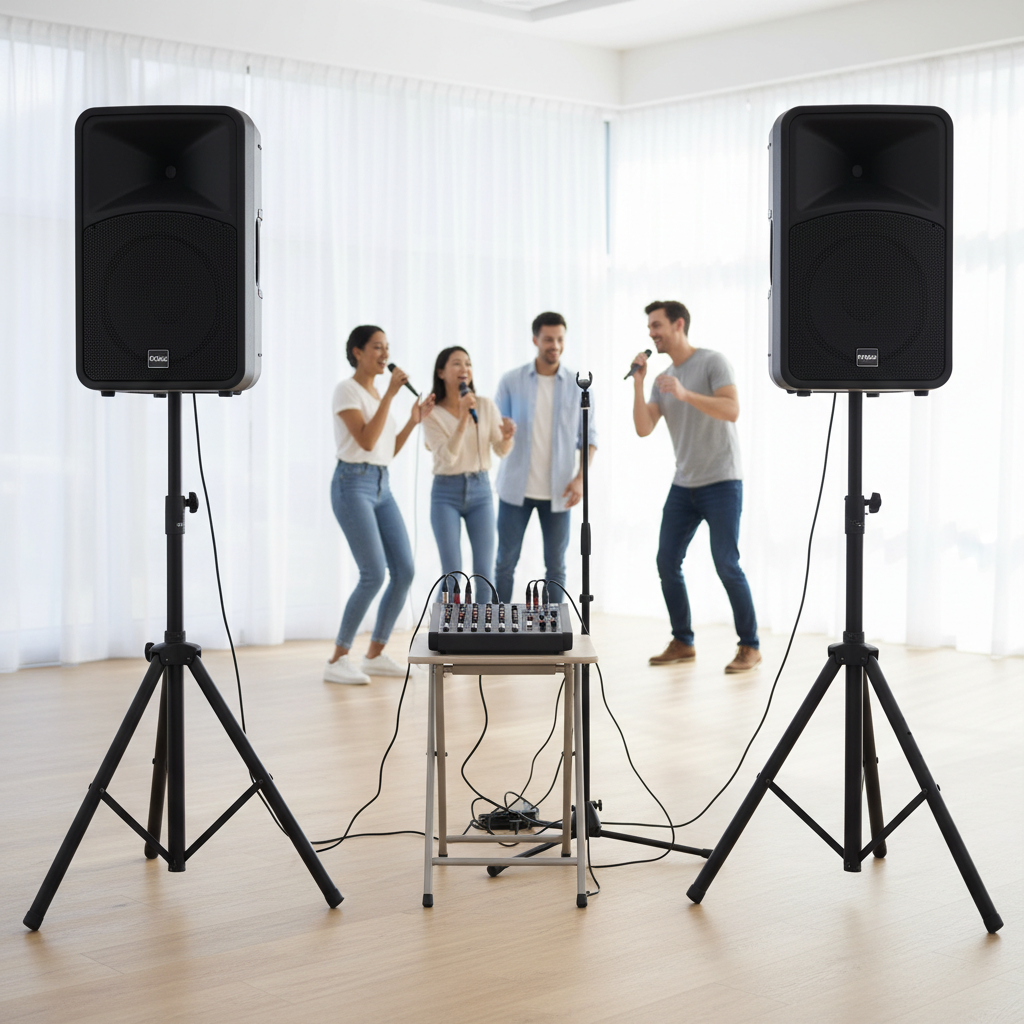
Unleash your inner superstar without disturbing the peace, or being disturbed yourself. The dream of a dedicated karaoke space often comes with the practical challenge of noise control. Whether you’re belting out power ballads late at night or perfecting your vocal harmonies, unwanted sound leaking in or out can quickly dampen the fun. This guide will walk you through the essential principles, materials, and steps to construct a DIY soundproof karaoke booth, ensuring your performances are contained and crystal clear.
Understanding the Fundamentals: Soundproofing vs. Acoustic Treatment
Before diving into construction, it’s crucial to distinguish between two related but distinct concepts: soundproofing and acoustic treatment. Understanding their roles is key to achieving optimal results for your karaoke booth.
Soundproofing, also known as sound isolation, is about stopping sound from entering or leaving a room. Its goal is to create a barrier that physically blocks noise transmission, making sure your vocal solos don’t bother the neighbors and external sounds don’t ruin your recording. This involves structural strategies focusing on density, decoupling, and sealing.
Acoustic Treatment, on the other hand, focuses on improving the sound quality within a room. It manages how sound behaves inside the space, reducing echoes, reverberation, and uneven frequency responses. While essential for a great-sounding karaoke experience, acoustic treatment alone will not prevent sound from traveling through your walls to the outside world. For a truly effective karaoke booth, both isolation (soundproofing) and internal sound quality (acoustic treatment) are vital, but for stopping noise bleed, soundproofing takes precedence.
Essential Principles of Soundproofing for Your DIY Booth
Effective soundproofing relies on a combination of four key principles:
- Mass: Simply put, heavier, denser materials block more sound. Sound energy struggles to vibrate through massive objects, thus reducing transmission. Layering different dense materials is often more effective than using a single thick layer.
- Decoupling: This principle involves separating the structural components of your booth to prevent sound vibrations from traveling directly from one surface to another. Think of it as creating a “room within a room” effect, even if on a smaller scale, to break the direct transmission path. Staggered studs or resilient channels are common decoupling techniques.
- Sealing Air Gaps: Sound is like water; it will find the smallest crack or opening to escape or enter. Even tiny gaps around doors, windows, or electrical outlets can significantly compromise your soundproofing efforts. Airtight seals are non-negotiable.
- Damping: This involves converting sound energy into heat energy, thereby reducing vibrations within materials. Viscoelastic compounds like Green Glue, applied between layers of rigid materials, can significantly enhance damping and improve sound isolation.
Materials You’ll Need for a DIY Soundproof Karaoke Booth
Choosing the right materials is paramount. Here’s a breakdown of what you’ll typically need:
- Structural Materials:
- Drywall (Plasterboard): Especially 5/8 inch thick, used in multiple layers for significant mass.
- MDF (Medium-Density Fiberboard): Dense and compact, a good alternative or addition to drywall.
- Plywood/OSB (Oriented Strand Board): Can be used for basic framing or as structural layers.
- Insulation (for cavities):
- Mineral Wool (Rockwool): Offers excellent sound absorption and density for filling wall cavities.
- Fiberglass Insulation: A more budget-friendly option for filling gaps and absorbing sound within walls.
- Damping Compounds:
- Green Glue (Soundproofing Compound): Applied between layers of drywall or similar rigid materials to dampen vibrations and enhance sound blocking.
- Sealing Products:
- Acoustic Caulk/Sealant: A flexible, non-hardening sealant essential for filling all seams, cracks, and gaps.
- Weatherstripping: For creating airtight seals around doors and windows.
- Door Sweeps: To seal the gap at the bottom of doors.
- Decoupling Hardware:
- Resilient Channels (RCs): Metal strips that create a slight separation between drywall and wall studs, reducing vibration transfer.
- Isolation Clips: Similar to resilient channels, these clips attach drywall to studs with a rubber isolator for superior decoupling.
- Doors and Windows:
- Solid Core Doors: Much heavier and denser than hollow-core doors, providing better sound blockage.
- Window Inserts (Plexiglass): Thick plexiglass inserts can be custom-made to fit existing window frames, creating an air gap for soundproofing.
- Double-Paned Glass: For any built-in windows, ensure it’s double-paned with an air gap, ideally with different glass thicknesses to block a wider range of frequencies.
- Optional Acoustic Treatment (for inside the booth):
- Acoustic Foam Panels: Helps absorb mid-to-high frequencies and reduce flutter echoes inside the booth.
- Bass Traps: Corner-mounted panels that absorb problematic low-frequency sounds.
- Heavy Moving Blankets/Quilts: Can be draped or hung for additional sound absorption, especially for high frequencies.
- Thick Carpets/Rugs: Help absorb reflections from the floor.
Step-by-Step Guide: Constructing Your Soundproof Karaoke Booth
Building a soundproof karaoke booth is a project that requires careful planning and execution. Follow these steps for the best results.
1. Planning and Design
|
Our Picks for the Best Karaoke system in 2026
As an Amazon Associate I earn from qualifying purchases.
|
||
| Num | Product | Action |
|---|---|---|
| 1 | Karaoke Machine, Portable Bluetooth Speaker with 2 Wireless Microphones for Adults & Kids with Lights, Karaoke Microphone with PA System Supports USB/TF/REC/FM/AUX for Home Party Home System Packages |

|
| 2 | NBVOICE Professional Portable All-in-One Integrated 2-Way PA System Fixed Setup, Suitcase Design w/ 8-Channel Mixer, 2 Speaker Stands, Bluetooth, Mic for Performances, Presentations |
|
| 3 | Portable Karaoke Machine, with Wireless Microphones, Bluetooth Party Speaker with LED Lights, Loud Subwoofer, USB/AUX, Outdoor Karaoke Speaker for Adults & Kids, Home & Party |
|
| 4 | Ikarao Smart Karaoke Machine for Adults - with Lyrics Display, 32GB Karaoke Tablet, 2 Wireless Mics, Professional Karaoke System, 300W Peak Power, 4 DJ Lights, Karaoke Speaker for Any Occasion |
|
| 5 | Karaoke Soundbar with Subwoofer for TV: Sound Bar with 2 Wireless Microphones - Home Theater Surround Sound System - Bluetooth Speaker with Remote Supports HDMI ARC/Optical/AUX/USB for TV/PC |
|
| 6 | Ikarao Portable Karaoke Machine for Adults, Built-in Lyrics Display and Screen, 2 Self-Charging Wireless Microphones, Karaoke App, 140W Speaker, Connects to TV for Home Party Birthday Outdoor Camping |
|
| 7 | JBL Wireless Two Microphone System with Dual-Channel Receiver, Black |
|
| 8 | VOSOCO Karaoke Machine with 2 Wireless Microphones, Portable Bluetooth Speaker for Adults Kids, PA Systems Support TWS Echo Adjust TF USB AUX for Home Party Outdoor Travel |
|
| 9 | Karaoke Machine, Portable Bluetooth 5.3 Speaker with 2 Wireless Microphones for Adults, PA System with Pitch Correction & Echo Adjustment, Supports TWS/TF Card/USB/AUX/Live for Home Party (2MICS) |
|
| 10 | Karaoke Machine for Adults, Built-in 10.1" HD Lyrics Screen, Supports WiFi Bluetooth HDMI USB and TF, Portable Karaoke Player with 2 Wireless Microphones for Home Party Family Gathering |
|
Start by clearly defining your booth’s purpose, size, and location. Consider if it needs to be freestanding or built into an existing room. Measure your available space and sketch out a design, accounting for door and window placement, and crucial ventilation. A well-thought-out plan will save time and money in the long run. Remember to factor in your budget, as more advanced soundproofing techniques can increase costs.
2. Building the Structure (Walls, Floor, Ceiling)
The core of your soundproofing lies in the booth’s shell.
- Framing: Construct a sturdy frame using 2×4 or 2×6 lumber. For superior decoupling, consider building double-stud walls or staggered-stud walls, which naturally create an air gap to interrupt sound transmission.
- Flooring: The floor is often overlooked. For a truly soundproof booth, a “floating floor” is ideal. This involves laying rubber mats or specialized sound isolation pads directly on your subfloor, then building a new floor structure (e.g., layered plywood/MDF) on top, ensuring it doesn’t directly touch the existing walls. If a floating floor is too complex, at least add dense layers of plywood or MDF, combined with a heavy rug or carpet.
- Walls: This is where mass and decoupling shine.
- Attach the first layer of dense material, such as 5/8 inch drywall or MDF, to the inside of your wall studs.
- Fill all cavities within the stud framework completely with mineral wool or fiberglass insulation. Ensure there are no gaps.
- Apply a generous layer of damping compound like Green Glue to the back of your second layer of drywall.
- Attach the second layer of drywall on top of the first, staggering the seams from the first layer. For even better isolation, use resilient channels or sound isolation clips before attaching the second drywall layer to decouple it from the studs.
- Ceiling: Replicate the wall construction for the ceiling, using multiple layers of dense material, insulation, and damping compound. Decoupling the ceiling from the main structure is also highly effective.
3. Soundproofing Doors and Windows
These are common weak points in any soundproofing effort.
- Doors: Opt for solid core doors, as they offer much more mass than hollow ones. Install heavy-duty weatherstripping around the entire door frame to create an airtight seal when closed. Add a door sweep at the bottom to seal the gap between the door and the floor. For maximum sound reduction, consider a double-door system with a small airlock space between them.
- Windows: The best practice is to minimize or eliminate windows. If you need a window, use a thick pane of plexiglass as a window insert, ensuring it creates an airtight seal against your existing window frame. For built-in windows, use double-paned glass, ideally with panes of different thicknesses and a wide air gap between them to block a broader spectrum of sound frequencies.
4. Sealing All Gaps and Cracks
This step is critical and often underestimated. Sound will exploit the tiniest opening.
- Acoustic Caulk: Apply acoustic caulk to all seams, joints, and edges where walls meet the floor, ceiling, and each other. Caulk around window and door frames, and anywhere two materials meet.
- Electrical Outlets/Fixtures: These are direct sound leaks. Use acoustic putty pads behind outlet boxes or construct insulated boxes around them to maintain the integrity of your soundproofed walls.
5. Integrating Ventilation
A completely sealed soundproof booth will quickly become stuffy and uncomfortable. Proper ventilation is essential for comfort and safety.
- Baffled Systems: Design a ventilation system that prevents sound from escaping or entering. This typically involves a “labyrinth” or baffled duct system, where the air path is indirect and lined with sound-absorbing material.
- Inline Fans: Use quiet inline fans for air intake and exhaust, positioning them outside the booth if possible to minimize fan noise within the space. Ensure all ducts are sealed and insulated.
6. Adding Internal Acoustic Treatment (Optional but Recommended)
Once the booth is soundproofed, address the internal acoustics for the best karaoke experience.
- Acoustic Foam Panels: Place these strategically on walls and ceilings, especially at first reflection points, to reduce echo and flutter.
- Bass Traps: Install bass traps in the corners of your booth, as low frequencies tend to build up there, leading to a muddy sound.
- Heavy Blankets/Carpets: Drape heavy moving blankets or use thick carpets to further absorb reflections and add to the overall acoustic comfort.
“True soundproofing is a battle against airborne and structure-borne noise. You need mass to reflect sound, isolation to break vibration paths, and an airtight seal to plug every single leak. Compromise on any of these, and your efforts will be diminished.”
Common Mistakes to Avoid When Building Your Booth
Even experienced DIYers can fall into common traps.
- Underestimating Air Leaks: The most common mistake is neglecting small gaps. Sound waves are incredibly efficient at finding these pathways, rendering expensive materials ineffective if the seal isn’t perfect.
- Confusing Sound Absorption with Sound Blocking: Acoustic foam panels and egg cartons primarily absorb sound within a room, improving its internal acoustics. They offer minimal soundproofing against sound transmission through walls.
- Neglecting Ventilation: A sealed box without fresh air is dangerous and uncomfortable. Always integrate a soundproofed ventilation system.
- Using Insufficient Mass: Thin walls or single layers of drywall won’t provide adequate sound isolation for loud karaoke sessions. Mass is your primary defense against sound transmission.
- Not Planning for Isolation of Vibrations: Direct contact between structural elements (e.g., walls and floor) allows vibrations to pass through easily. Incorporate decoupling measures wherever possible.
Conclusion
Building a DIY soundproof karaoke booth is a rewarding project that transforms your home entertainment. By focusing on the core principles of mass, decoupling, sealing, and damping, and meticulously executing each step, you can create a private oasis for your vocal performances. Remember that patience and attention to detail, particularly with sealing all potential sound leaks, are your